BYD Extends Its Lead Over Tesla in Global EV Sales
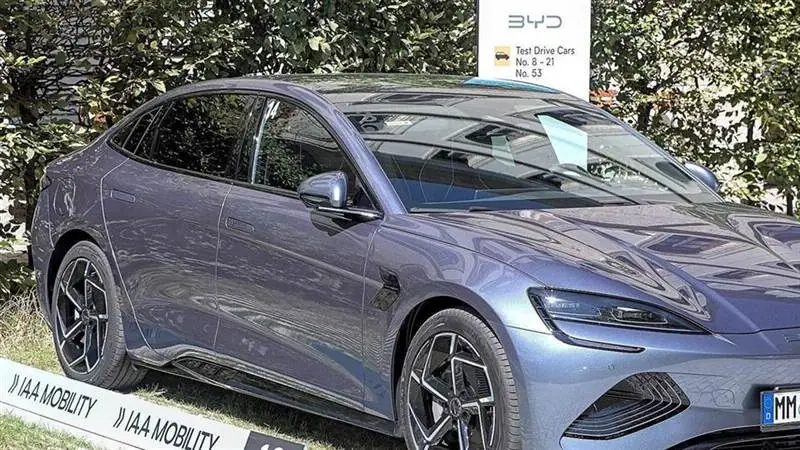
The year the crown changed hands
For a decade, Tesla measured itself against every challenger and came out ahead. That changed in 2025. BYD announced that its global battery-electric vehicle sales reached 2,256,714 units for the full year, up 27.9% from 2024, while Tesla delivered 1,636,129 cars, down 8.6%, according to figures both companies published in early January 2026. For the first time in the industry's short electric history, the annual battery-electric crown belongs to the Chinese automaker.
The gap is substantial: roughly 620,000 cars, about the annual output of a large car factory. It is a striking reversal from 2024, when Tesla still held a narrow lead of under 25,000 battery-electric units.
The two companies had been trading blows at the quarterly level since late 2023, when BYD first outsold Tesla in a single quarter, but the full-year title had always returned to the American brand. Not anymore.
The road here was long and deliberate. BYD stopped making pure gasoline cars in 2022, the same year its total plug-in sales first overtook Tesla's. It became China's largest automaker by sales in 2024, and in 2025 it reportedly entered the top five of global car groups by volume for the first time. What looked like a near-miss in 2024 — when BYD's 1,764,992 battery-electric sales fell just short of Tesla's 1,789,226, per company data reported by The Driven — turned out to be the last one.
The numbers behind the flip
BYD's strength came from volume across every category it touches. Alongside its 2.26 million battery-electric cars, the company sold 2,288,709 plug-in hybrids, meaning its total new energy vehicle output reached roughly 4.6 million units in 2025, an increase of about 8% year over year, according to company statements reported by Yicai and Xinhua. BYD has now been the world's largest NEV seller for four consecutive years, and it stopped building pure gasoline cars altogether back in 2022.
Tesla's trajectory ran in the opposite direction. Its fourth-quarter deliveries of 418,227 cars were down 15.6% year over year, and while BYD's passenger battery-electric sales hit a record 650,811 units in the same quarter, per data compiled by CNEVPost, the American automaker closed the year with its second straight annual decline. Counting plug-in hybrids alongside its battery-electric cars, BYD's roughly 4.6 million total is nearly three times Tesla's entire global volume. What was once a two-horse race for the future of the car industry now has a clear front-runner.
How BYD built its lead
Three factors stand out. The first is scale at home: BYD is the best-selling brand in the world's largest EV market, and its relentless cadence of new models — from the Seagull city car to the premium Yangwang line — gives it a product for nearly every budget segment in China.
The second is exports. BYD's overseas sales of passenger cars and pickups surpassed 1 million units in 2025, more than doubling year over year, according to figures the company shared with Chinese state media. Its cars are now sold in more than 110 countries and regions, and it has moved from exporting to building: plants in Thailand, Uzbekistan and Brazil are already producing cars, and the company's first European factory in Szeged, Hungary, is preparing to start production. In Southeast Asia, Latin America and beyond, BYD has become the default first-EV choice for a wave of middle-income buyers, and the company describes overseas expansion as a core pillar of its growth rather than an afterthought. The strategy is paying off where it hurts Tesla most — in Europe, BYD registrations surged 276% year over year to 159,869 units in the first eleven months of 2025, while Tesla's fell 28% to 203,382, according to registration data cited by EV.com.
The third is vertical integration. BYD makes its own batteries, semiconductors and even ships to carry its exports, which lets it cut prices quickly when competition demands. That control of the supply chain is precisely what allowed the Sealion 7, Seal and Dolphin line-up to undercut established brands across Asia, Latin America and now Europe.
Scale the old guard can't match
The manufacturing depth behind these numbers is worth spelling out. BYD controls its own battery cells, power electronics and chip design, and it has even commissioned its own car-carrier ships to speed exports. Research spending rose 17% in 2025 to roughly 63.4 billion yuan, among the biggest R&D budgets of any carmaker, according to company figures cited in Chinese media. That vertical integration is what lets BYD absorb price cuts that would gut competitors' margins — and why established automakers in Europe and Japan increasingly study its playbook rather than dismiss it.
What it means for Tesla
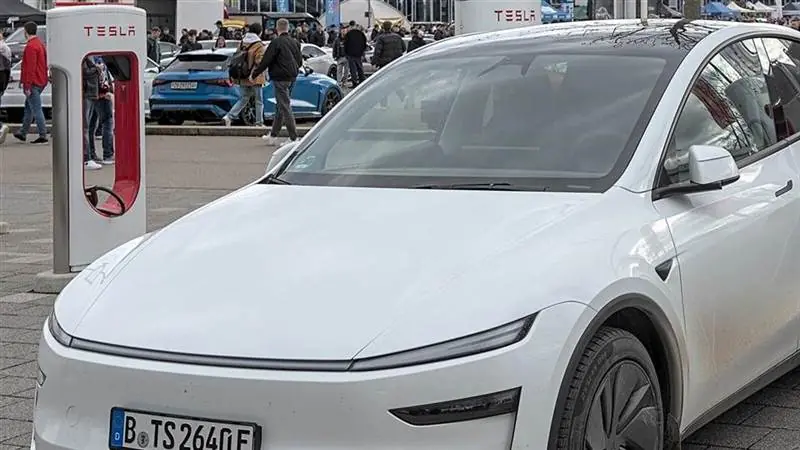
Losing the sales crown does not mean Tesla is collapsing — it still generated substantial profits and remains the benchmark for software, charging and efficiency. But the 2025 result confirms a shift in the industry's center of gravity. BYD sells more than a million more plug-in vehicles per year than Tesla, grows faster in every region Tesla does not dominate, and is expanding local production on three continents. Tesla, meanwhile, is leaning on a refreshed Model Y and on its ambitions in robotaxis and energy storage to reignite growth.
For buyers, the rivalry is good news: the two largest EV makers are competing on price, range and technology across every segment. For the industry, 2025 will be remembered as the year the world's best-selling electric carmaker stopped being an American company — and started being a Chinese one.
The competitive dynamics going forward look little like the past decade. Tesla competes on software, charging and brand; BYD on price, model breadth and manufacturing cost. In Europe the two now chase the same buyer, and in Southeast Asia and Latin America BYD already sets the pace. Tesla's answer — a cheaper model, the Cybercab, energy and autonomy revenue — targets margins more than volume. BYD has shown no interest in slowing down: new plants on three continents, a model line refreshed every year, and a home market it already dominates. Whichever way 2026 breaks, the benchmark for global EV leadership now runs through Shenzhen.