Tesla's 2025 Deliveries Mark a Second Straight Annual Decline
Two years of shrinkage
Tesla's growth era is officially over. The company delivered 1,636,129 vehicles in 2025, down 8.6% from the 1,789,226 it reported for 2024, according to Tesla's own production and delivery figures. That follows 2024's decline of 1.1% from the all-time peak of 1,808,581 set in 2023. Two consecutive annual declines are a first for the company, and the drop in 2025 was far steeper than the year before.
The full-year picture hides how bad the finish was. In the fourth quarter of 2025, Tesla delivered 418,227 cars, down 15.6% from the 495,570 it delivered in the same quarter a year earlier, per company data cited by Xinhua. Production for the year totaled about 1.655 million units, meaning factories increasingly outpaced demand rather than the reverse.
Declining sales have not yet meant collapsing profits. Tesla still generated $4.4 billion in GAAP operating income in 2025, per its fourth-quarter shareholder update, and its energy storage deployments set records through the year. But the car business funds everything else, and its shrinkage narrows the margins — literally and figuratively — for the company's bets on robotics, autonomy and grid storage.
A brutal final quarter
Much of the Q4 damage traces to Washington. The $7,500 federal clean-vehicle tax credit — the single most important EV incentive in the United States — expired on September 30, 2025, under the spending bill passed that summer. American buyers pulled purchases forward into the third quarter to beat the deadline, then stayed away: data from Cox Automotive showed US electric vehicle sales across all brands plunging more than 40% year over year in November 2025. Tesla, which still accounts for roughly 45% of the US EV market, felt that whiplash more than anyone. Its US sales came in at roughly 589,000 for the year, down about 7%, according to Cox Automotive estimates cited by market analysts.
Europe compounded the problem. Tesla registrations across the continent totaled 203,382 units in the first eleven months of 2025, down 28% from the same period in 2024, according to registration data cited by EV.com. China, the other pillar, was softer too: retail sales there fell 7.4% year over year over the same window as local brands — led by BYD, Xiaomi and a dozen aggressive newcomers — kept raising the bar on features and price.
Why demand is slipping
Analysts point to three overlapping causes. The first is the lineup. The Model 3 and Model Y, which together make up the overwhelming majority of Tesla's volume, went on sale in 2017 and 2020 respectively, and even the refreshed Model Y that launched in 2025 is an evolution rather than a new category. Promised affordable models and the long-delayed second-generation platform have yet to arrive in volume, leaving Tesla without a fresh story in the showrooms where it matters most. The concentration is stark: in 2024, the Model 3 and Model Y accounted for 1,704,093 of Tesla's 1,789,226 deliveries — roughly 95% of everything it sold — per the company's own annual breakdown.
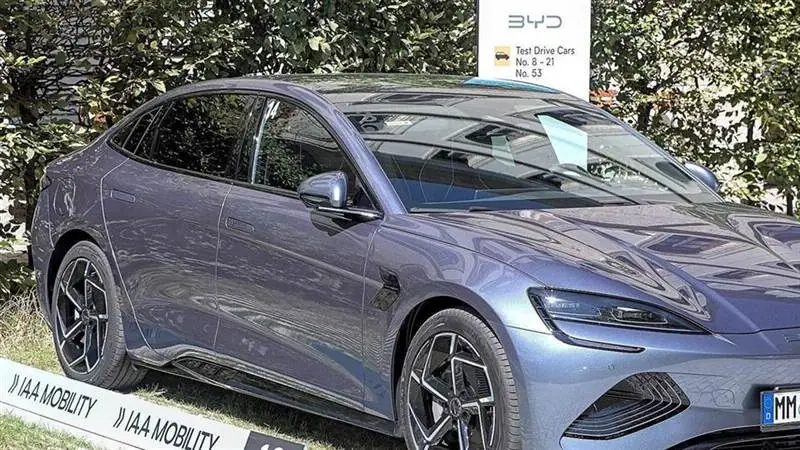
The second is competition. General Motors, Hyundai, Volkswagen and a wave of Chinese manufacturers now sell credible electric cars at every price point, and several of them grew strongly in 2025 even as Tesla shrank. BYD's 2025 battery-electric total of 2.26 million units was enough to push Tesla out of the global top spot for the first time.
The third is the brand itself. CEO Elon Musk's high-profile political activity has alienated part of Tesla's traditionally environmentally minded customer base, particularly in Europe, where the sales decline has been sharpest. Industry commentators from Cox Automotive to Electrek have linked the European slump at least partly to buyer backlash against Musk, though the aging lineup and heavier competition make it impossible to isolate a single cause. Musk poured roughly $277 million into the 2024 US election campaign and then took a prominent role in the new administration's cost-cutting push — political exposure no other automaker chief comes close to matching. The Cybertruck, meanwhile, has underwhelmed even sympathetic reviewers, with unsold inventory reportedly piling up.
Room to build, short of buyers
The uncomfortable detail in Tesla's 2025 numbers is that the decline is not a capacity problem. By the company's own disclosures, its installed annual production capacity exceeds 2.3 million vehicles across Fremont, Shanghai, Berlin and Texas. Delivering 1.64 million means the company is running its plants at well below two-thirds of that potential. Shanghai alone can build more than 950,000 cars a year, Fremont over 550,000, Berlin more than 375,000, and Texas another half-million once Cybertruck and Cybercab lines are counted, according to Tesla's own capacity disclosures. Tesla is, in short, demand-constrained — and in July 2026 it celebrated its 10 millionth vehicle built, a milestone that once looked likely to arrive years earlier. The first half of 2026 has brought no relief either: the company produced about 452,000 and delivered about 480,000 vehicles in the second quarter, a pace consistent with roughly 1.8 million for the year, per figures cited by Electrek.
There were bright spots. Energy storage deployments set records, the refreshed Model Y remains the best-selling EV in several markets, and Tesla's profitability held up better than its volume. But as a carmaker, Tesla enters 2026 with two shrinking years behind it, a expiry-depleted US incentive landscape, and rivals that are larger, cheaper or newer than at any point in its history.
Can 2026 change the story?
Tesla's own roadmap says yes: the Cybercab robotaxi production line is being installed, the cheaper next-generation vehicle is finally edging toward production, and energy and software revenue is growing. Yet the core car business is what funds those bets, and reversing its trajectory requires either genuinely new products or a demand environment that is currently moving the other way. The company began removing safety monitors from its Austin robotaxis in January 2026 and is installing Cybercab production lines, per its shareholder update — evidence that the pivot to autonomy is accelerating even as the core car market erodes. The second annual decline confirms that Tesla's problem is no longer a single bad year — it is a trend.