Norway Is About to Complete Its Shift to Electric Cars
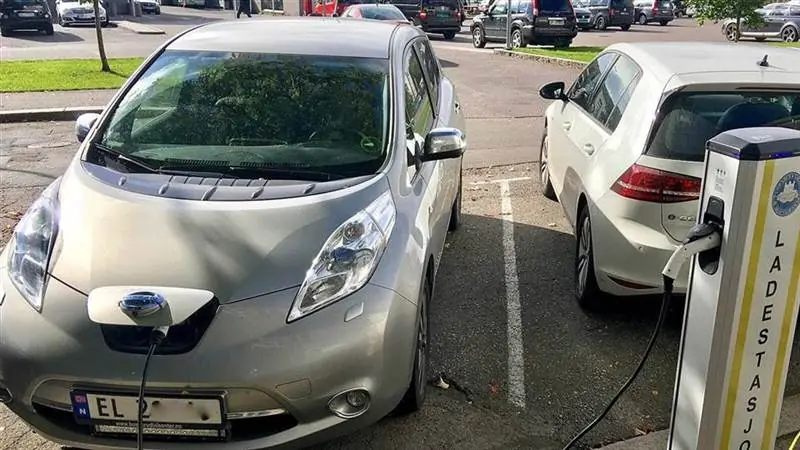
A market where petrol is the exception
Norway has spent a decade as the world's electric car laboratory, and in 2025 the experiment essentially finished. Battery-electric vehicles took 95.9% of all new car registrations for the year, up from 88.9% in 2024, according to the Norwegian Road Federation (OFV). In December alone the share hit 98%, and the few non-electric cars that were still registered were overwhelmingly niche vehicles: accessible transport conversions, police and emergency units, a scattering of hybrids and sports cars. Pure diesels accounted for just 1% of the year's sales and petrol cars for 0.3%. Not a single new hydrogen car was registered all year.
The volume behind those percentages was remarkable too. Norway registered 179,550 new passenger cars in 2025, a record and a 40% jump from 128,691 the year before, with electric models accounting for 172,233 of them, according to OFV figures reported by Reuters and just-auto. A year-end buying rush — more on that below — pushed December registrations to 35,188 units, up 157.7% year over year.
The pattern held everywhere in the country. Several counties posted battery-electric shares above 97%, and even Finnmark — Norway's northernmost, coldest county — reached 86%, according to OFV. If anyone still believed cold weather or long distances would slow the transition, Norway's map has quietly retired that argument.
Incentives, not bans
Nothing about Norway's transition was achieved by prohibition. The country never banned combustion cars; instead it made them progressively more expensive while making electric cars progressively cheaper to own. EVs were exempted from Norway's punishing purchase taxes and value-added tax, escaped tolls and ferry charges, and enjoyed parking and bus-lane privileges for years. As the Norwegian EV Association's director has often pointed out, the stick mattered as much as the carrot: registration taxes and fuel taxes kept pushing the cost of gasoline and diesel motoring steadily upward.
The policy signal stayed consistent for so long that buyers, dealers and importers all planned around it — and that consistency is exactly what most other countries have struggled to copy. Norway's parliament set the goal back in 2017 that every new car sold by 2025 should be a zero-emission vehicle. The market has now, in effect, delivered it.
"2025 has been a very special car year," OFV director Geir Inge Stokke said in the federation's year-end statement, crediting long-term and targeted electric car policy — and the immediate effect specific tax decisions have on the market. The approach is often misunderstood as pure subsidy; in practice it worked because tax pressure on combustion cars kept rising even as EV breaks were gradually trimmed.
There was also a final twist. From January 1, 2026, Norway began charging VAT of up to roughly $5,000 on electric cars priced above about $30,000, keeping the exemption only for cheaper models. The change triggered a stampede of year-end orders, and some manufacturers redirected cars from other markets to satisfy Norwegian demand before the deadline.
Tesla on top, Chinese brands rising
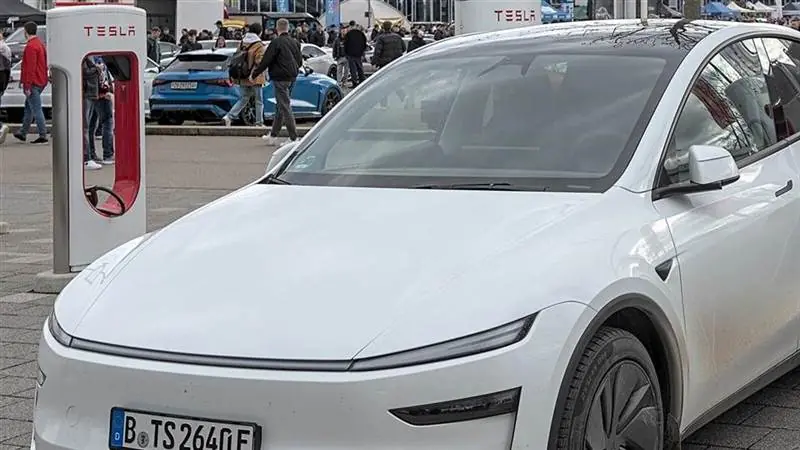
Tesla remained Norway's best-selling brand for the fifth consecutive year, registering 34,285 cars for a 19.1% market share, according to OFV data. The Model Y alone found 27,621 buyers — the highest annual total ever recorded by a single model in the country. Volkswagen followed at 13.3%, with Volvo at 7.8%.
The Model 3 also ranked among the country's top five models, and Volkswagen finished the year with a strong December that briefly outsold Tesla in the final month, according to OFV's monthly breakdown. Beneath the headline brands, Toyota's bZ4X and VW's ID.4 and ID.7 filled out the leaderboard — evidence that mainstream manufacturers, not just Tesla, now own Norway's electric market.
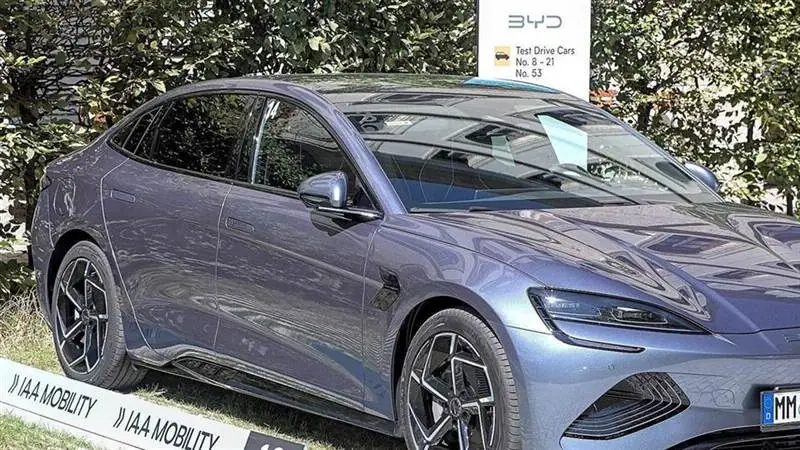
The more interesting movement is further down the table. Cars built in China reached a 13.7% share of Norwegian registrations in 2025, up from 10.4% a year earlier, led by BYD, whose sales more than doubled on the strength of the Sealion 7. In a market where every buyer is already EV-fluent, the competition is no longer about convincing people to go electric — it is about which brand offers the best value, range and technology, and that is a fight where Chinese manufacturers are only getting started.
The fleet still has a long tail
Complete the new-car market, and the roads tell a slower story. OFV director Geir Inge Stokke noted that electric cars overtook diesels in Norway's total passenger car fleet during 2025 — a genuine milestone — yet roughly two-thirds of vehicles on Norwegian roads still run on fossil fuels. The average car in Norway stays registered for well over a decade, so the combustion fleet will linger into the 2040s even with almost no new petrol or diesel sales.
Commercial transport is following at different speeds. Electric vans reached a 45.2% share of new registrations in 2025 and electric buses 56.3%, per OFV, while trucks lagged at 17.3% electric, with the rest still overwhelmingly diesel. Charging infrastructure, heavy-duty electrification and the used-car market are the next frontiers.
Context makes the contrast starker. Nordic neighbors Denmark and Sweden ended 2025 with electric shares of roughly 50% and 37% respectively — strong numbers by European standards, yet nowhere near Norway. And across the wider EU, the bloc reportedly agreed in December 2025 to soften its planned 2035 combustion-engine phase-out after industry pressure, widening the gap between Norwegian practice and European policy.
A test case for the rest of the world
Norway is wealthy, small and energy-rich, and skeptics rightly caution against copy-pasting its model. But the core lesson travels: a predictable, decade-long tax framework that rewards EVs and taxes combustion cars can take a market from 30% electric to 96% faster than almost anyone thought possible. As the EU waters down its 2035 engine phase-out and the United States removes federal incentives, Norway stands as proof of what steady policy can achieve — and of what other countries are now choosing not to do.
Norway's own transition is not quite finished either. The 2026 VAT change dented demand at the margin, yet in the first quarter of 2026 battery-electric cars still took 97.9% of new registrations, with plug-in hybrids pushing the plug-in total above 98%, according to OFV data cited by industry trackers. The market barely noticed the tax. The combustion car, in Norway, is simply no longer the default.