Tesla’s New Roadster Can Leave the Ground. Is It Really a Flying Car?
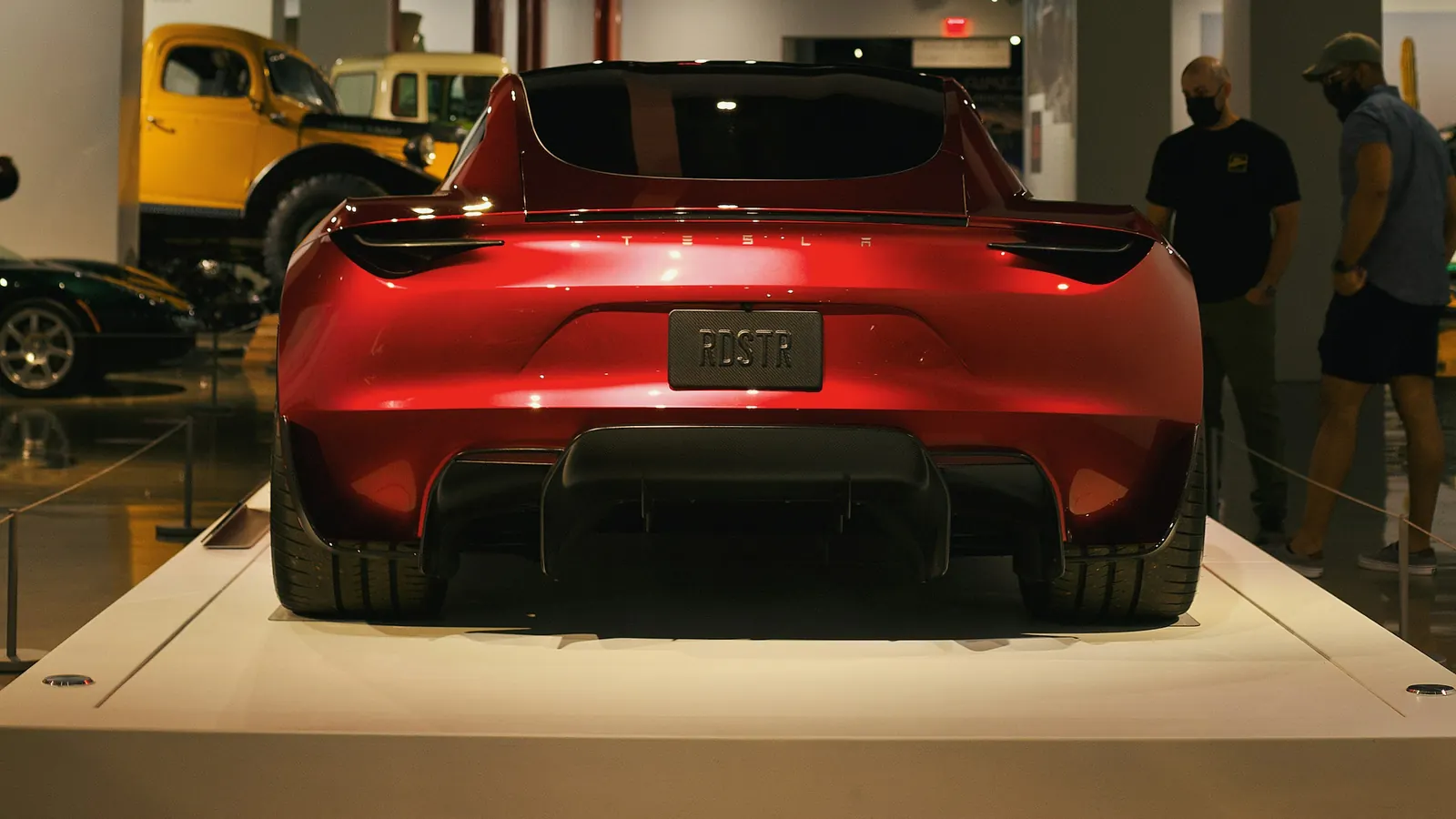
A reveal built around one extraordinary stunt
Tesla used the October 15, 2026, reveal of its redesigned Roadster to stage a demonstration unlike a normal car launch. At a SpaceX test site in McGregor, Texas, a prototype drove upside down along a ramp using an underbody suction system, then used cold-gas thrusters for brief airborne maneuvers. Reuters reported that the car turned in the air and landed under thruster power; the Associated Press described short jumps and spins. The event showed a controlled prototype demonstration, not a production car making an ordinary trip.
Calling it a “flying car” captures the spectacle but can blur the distinction between a brief lift and practical flight. The Roadster was not shown cruising over roads, carrying passengers between destinations or operating as an aircraft. Its prototype briefly left the ground in a prepared demonstration. That is a striking engineering display, but it does not establish how the system would work outside that setting.
Two unusual systems, two different jobs
The reveal paired two technologies. Tesla used suction to keep the prototype attached to an inverted ramp, while built-in cold-gas thrusters produced the short airborne actions. The first demonstration was about grip on a surface; the second was about movement away from one. Seeing them together makes for memorable video, but neither feature by itself answers the everyday questions a buyer would ask about a road car.
Tesla has not published a detailed engineering account that lets outside observers assess the hardware’s weight, operating limits, repeatability or maintenance requirements. A one-off stunt can show that a prototype performed a maneuver at a particular event. It cannot, on its own, establish reliability over thousands of road miles, safe operation around traffic or the cost of bringing the equipment into a customer vehicle.
The Rocket version is not a normal road car configuration
Axios reported that Tesla listed three Roadster versions and that the flying version was not approved for public-road use. That qualification matters more than the flying-car headline: a feature presented at a launch is not automatically certified for everyday driving, and a short airborne demo does not establish that the car has approval for routine flight.
The safest description today is a high-performance electric sports-car program with an advertised thruster-equipped version and a dramatic prototype demo. Buyers would still need clear answers about which hardware comes with each trim, where each version can legally operate, and whether the flight system will appear in a production vehicle at all.
Performance numbers remain company claims
Tesla engineering chief Lars Moravy said at the event that the car can accelerate from zero to 60 miles per hour in less than a second. Reuters also reported a claimed range above 300 miles. Those figures are statements from the company, not independently measured results from a production-spec vehicle. No road test can yet tell prospective owners how the final car will perform with a full battery, on public pavement or after repeated hard use.
Tesla did not announce a final purchase price at the reveal, according to the AP and Reuters reports. Reservation deposits shown after the event should not be mistaken for the car’s total price. Range, charging behavior, delivery timing and the equipment included in each version will matter at least as much as a headline acceleration number.
A 2028 target follows years of delays
The Roadster’s history explains why the timeline deserves careful wording. Tesla first previewed the second-generation car in 2017 and originally discussed deliveries beginning in 2020. The October 2026 reveal came years later, and Elon Musk said consumer production would not begin until 2028. That is the company’s current target, not a confirmed delivery date for customers.
The new event gives Tesla a halo product: an expensive, attention-grabbing car that can showcase engineering ideas and reinforce the company’s performance image. For most drivers, however, the Roadster is not a near-term alternative to a family EV or daily commuter. Its practical relevance will depend on whether the production car arrives, what it costs and which of the event’s most unusual features survive certification and real-world testing.
What to watch after the reveal
The next useful evidence will be less cinematic: a final specification sheet, a firm price, a tested range, details about the three configurations and a production schedule that moves beyond a target year. For the Rocket version, Tesla would also need to explain its operating limits and approval status in each market. Until those details are public, the leap from a short demonstration to a usable flying vehicle remains a promise.
The Roadster’s October reveal proved that Tesla can make a prototype launch feel like a science-fiction scene. It did not prove that owners will soon be able to fly over traffic. The car is real; the public-road flying future is still unconfirmed.
Reporting notes
This article draws on Associated Press, Reuters and Axios reporting published October 16, 2026, and Tesla’s Roadster materials available after the reveal. Performance figures are identified as company claims rather than independent test results.