Charging guide
Public EV Charging and Route Planning: A Calm, Repeatable Method
Plan charging stops around connector fit, charging speed, route conditions, payment access, and backup options for longer EV trips.
Check the connector and vehicle limit
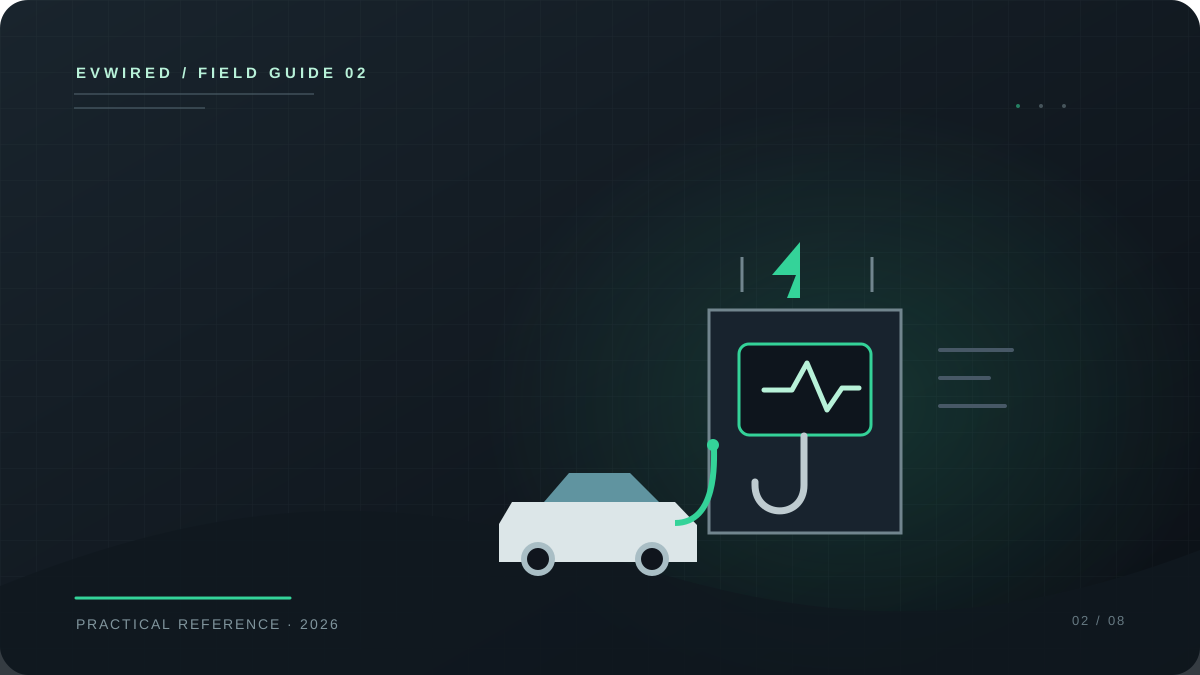
Before planning around a fast charger, confirm which connector standard the car uses in the market where it was sold. AC charging and DC fast charging may use different inlets, and adapters are not automatically compatible with every vehicle or station. Read the vehicle manual and the charge-point operator's terms. The maximum number printed on a charger describes its potential output under specified conditions, not a promise that your car will receive that power for the full session.
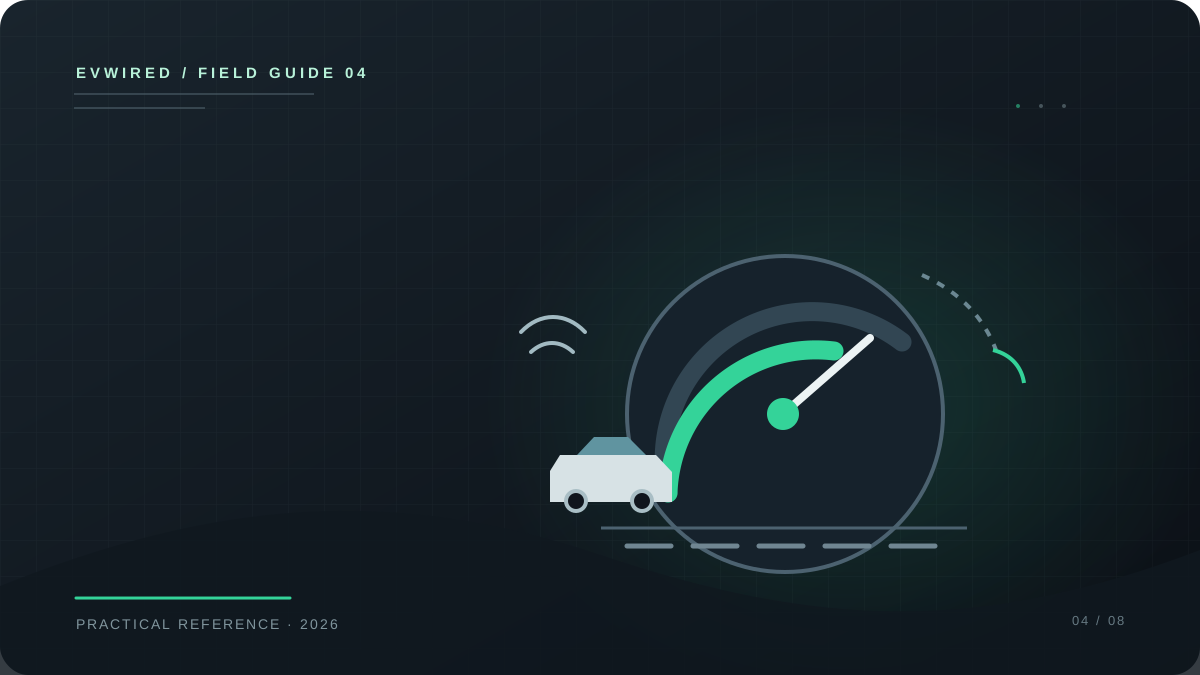
The vehicle's charging curve, battery temperature, state of charge, and station load affect how quickly energy arrives. A car may charge fastest when its battery is at a lower state of charge and slow down as it fills. If supported, route the destination through the car's navigation so the battery can prepare for rapid charging. Otherwise, follow the maker's instructions on preconditioning. The AFDC station locator and charging information provide a U.S. starting point, while operator apps and current regional maps help verify connector availability and station status.
Map the trip in stages
Start with the full itinerary: distance, elevation, likely traffic, weather, passenger load, and places where you can stop for a meal or rest. Estimate energy use for the demanding sections, not just the route average. High speeds, headwinds, cold temperatures, hills, roof cargo, and towing can change consumption. Use a conservative range estimate and compare it with the vehicle's display or a trip planner that understands the exact model. Be cautious with generic maps that assume ideal weather or a new battery.
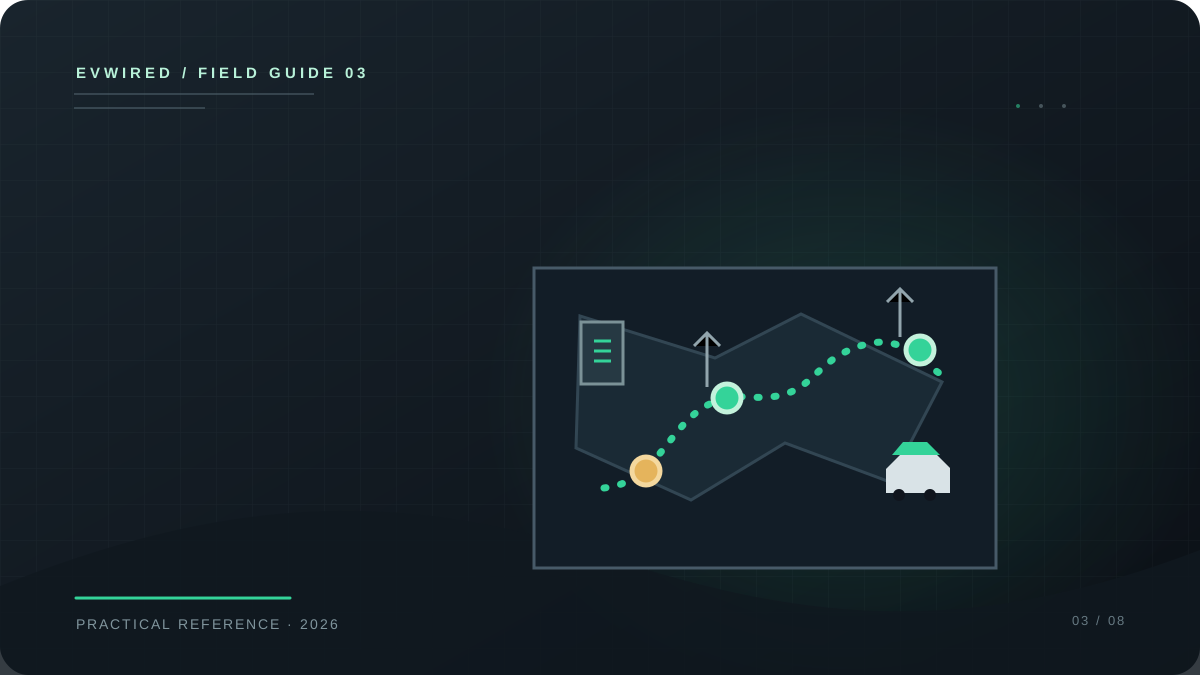
Break the trip into charging legs, with the next confirmed charging area reachable even if consumption is worse than expected. A sensible stop often leaves flexibility to skip a crowded or offline station. Plan around the time you need to be stopped anyway, rather than adding the same fixed charging interval to every journey. A break of twenty minutes may add very different energy in different cars or at different battery temperatures. Keep arrival state of charge and expected departure charge visible in your plan so the assumptions remain understandable to other passengers.
Choose a useful charging stop
Compare more than charger power. Check how many compatible stalls exist, the recent status shown by the operator, opening hours, site access, parking fees, amenities, and distance from the route. A station with several working units can be preferable to a single high-output unit in an isolated location. If you need food, a restroom, or an accessible stop, verify that the facilities are open at the time you expect to arrive. In remote areas, look at the next available charging location before relying on the current one.
Consider whether your vehicle can use the site's cables, payment terminal, and network authorization. Some sites support contactless cards, some require an application or account, and roaming arrangements differ. Check whether parking time is limited, whether a connection fee applies, or whether a fee begins after charging ends. These details can matter as much as the electricity price. The AFDC public-charging overview describes common U.S. access models; read the local operator's live listing for current terms and check the physical signs when you arrive.
Prepare for payment and access
Before departure, create any necessary account, verify the payment method, and save the operator's support number. If an app requires a data connection, make sure it works on your phone and that you can complete the payment flow while parked. Where supported, a contactless bank card or vehicle-based authentication can simplify the stop. Carry a backup payment method. Do not assume a charger will accept a card simply because its screen resembles a payment terminal; payment options depend on the location and equipment.
At the charger, park within the marked space, confirm that the cable reaches without tension, and check that the station identifier in the app matches the unit. Follow the on-screen steps and wait for the car to confirm charging. If initiation fails, check for connector seating, an authorization error, or a station fault. Avoid repeatedly forcing a plug or using an unapproved adapter. If the unit does not start after the operator's troubleshooting steps, disconnect safely, report it, and move to the planned alternative rather than spending the whole break on a broken session.
Keep a practical arrival buffer
A buffer is energy you reserve for unexpected detours, queues, weather changes, or an unavailable stall. The right margin depends on the road network and your risk tolerance; no single percentage fits every trip. A dense corridor with several stations close together offers different choices from a winter route through a remote region. Increase the margin when driving an unfamiliar vehicle, towing, or traveling where one missed stop would cause a substantial delay. Treat the dashboard estimate as a live estimate that can change with conditions.
Do not arrive with a nearly empty battery just to make a charging session slightly shorter if there is a safer earlier stop. Conversely, charging to a very high level at a fast charger may take longer if the car tapers power near full. Use the vehicle's guidance and planned next leg to choose a departure point. Drivers should not be distracted by the plan while moving; have a passenger manage changes or pull over safely. Recheck the route when conditions change, and be willing to stop earlier when wind, rain, traffic, or temperature makes the original estimate less credible.
Build a backup into the plan
For each critical charging stop, identify another compatible station or a safe place to wait and reassess. Check that the backup is actually reachable at the projected state of charge, rather than merely appearing nearby on a map. Save the address or station name offline when possible. In areas where charging options are far apart, consider whether a shorter leg or an overnight stop reduces the consequences of a failure. A charger shown on an old map may have changed access, so verify current operator information before the trip.
After a long drive, note what worked: actual consumption, time connected, payment friction, queues, and whether amenities were open. Those observations improve later estimates, but avoid assuming they will exactly repeat in different weather or traffic. Keep software and navigation current as the vehicle maker recommends, while remembering that map updates cannot guarantee station availability. The habit that matters is simple: confirm the site, have another choice, and retain enough energy to reach it. A calm plan gives you options instead of relying on a single optimistic estimate.
Sources and further reading
These primary sources support the technical and consumer information in this guide. Local requirements and model-specific details can differ.
-
Alternative Fueling Station Locator
U.S. Department of Energy, Alternative Fuels Data Center
A U.S. resource for finding alternative-fuel and EV charging locations.
-
Charging Electric Vehicles in Public
U.S. Department of Energy, Alternative Fuels Data Center
Public charging types, access, and charging considerations.
-
Fuel Economy and EV Range Testing
U.S. Environmental Protection Agency
Context for interpreting official U.S. range figures.