CATL Plans Small-Scale Solid-State Battery Output by 2027
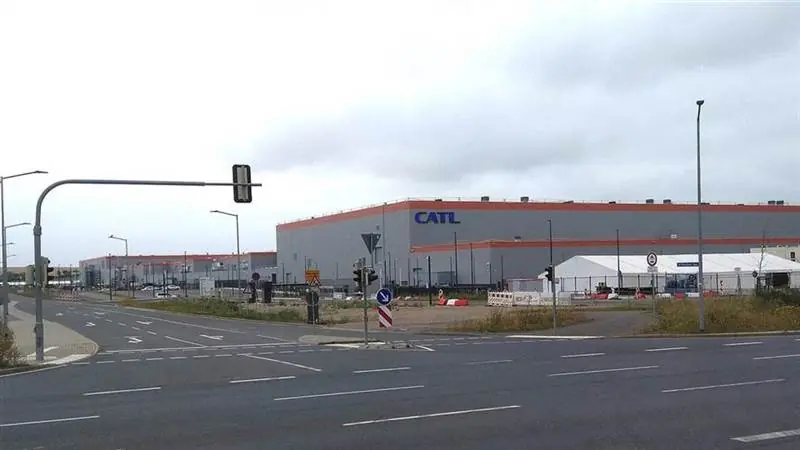
The Battery Giant Commits to a Date
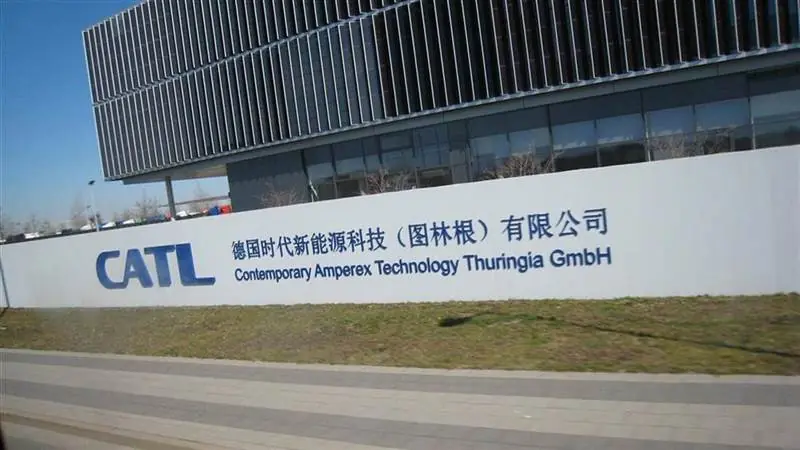
CATL, the world's largest maker of electric vehicle batteries, has put a timeline on the industry's most anticipated technology. The Chinese company, which supplies roughly one in three EVs globally, has said it expects to begin small-batch production of all-solid-state batteries in 2027, a target its chief scientist Wu Kai has repeated in public appearances as the company pushes the chemistry from laboratory samples toward automotive-grade cells.
The commitment carries weight because of who is making it. CATL's customers include Tesla, BMW, Mercedes-Benz, Volkswagen and nearly every major Chinese automaker, so any shift in its cell roadmap ripples through the entire industry. It also carries an unusual degree of candor: alongside the 2027 target, the company has been blunt about how much work remains.
Where the Technology Actually Stands
According to statements reported from industry events, CATL's sulfide-based all-solid-state prototype cells have reached an energy density of around 500 watt-hours per kilogram in laboratory testing, roughly double the density of today's best mass-produced lithium-ion cells. Such a cell could, in principle, let a car travel twice as far on a battery of the same weight, or halve the battery weight for the same range.
But lab records are not products. At the Summer Davos forum in June 2026, CATL chairman Robin Zeng rated the maturity of all-solid-state technology at level 4 on a nine-point scale, meaning laboratory prototype validation rather than engineering verification, and said the probability of fitting the batteries to millions of vehicles before 2030 was very small. Wu Kai has framed the goal as reaching levels 7 and 8, process finalization and small-batch capability, by 2027, which is precisely the window the company's production target occupies.
The Sulfide Route and Its Obstacles
CATL has chosen sulfide solid electrolytes, the same family of materials pursued by Toyota, Samsung SDI and Solid Power. Sulfides conduct lithium ions almost as easily as liquids, but they react with moisture to form toxic hydrogen sulfide, degrade against high-voltage cathodes, and demand constant stack pressure to keep layers in contact. Engineers at battery makers describe the ceramic layers as polished slate tiles: dense, brittle and intolerant of imperfection.
The company's stated engineering milestone confirms the difficulty. According to reporting on CATL's program, the priority is scaling from roughly 20 ampere-hour laboratory samples to 60 ampere-hour automotive-grade prototype cells, a jump that forces every manufacturing weakness into the open. CATL has also acknowledged that sulfide solid-state cells currently cost three to five times more than conventional lithium-ion cells, and the company has publicly dismissed rumors of 2,000-kilometer solid-state EVs arriving by 2027, pointing early applications toward drones and robotics instead.
A Patent Trail Points to the Plan
CATL's engineering thinking is also visible in its filings. In March 2026, the World Intellectual Property Organization published a CATL patent describing a protected cathode material aimed squarely at stabilizing sulfide electrolytes, the interface problem that has long blocked practical sulfide cells. The document details a layered cathode particle with a cobalt-rich active material and a protective coating designed to stop the electrolyte from degrading against the electrode, according to reporting on the filing.
Patents alone carry no schedule, as analysts were quick to note, but they sketch the route from 500 watt-hours per kilogram in a glovebox to a cell that survives a decade of charging cycles. The company has reportedly also reserved large quantities of battery raw materials to secure the coming ramp, underscoring that its caution is about process maturity, not supply.
A Pilot Line Takes Shape in Yibin
Industry tracking by the consultancy SMM points to a pilot and trial production line of roughly 2 gigawatt-hours at CATL's Yibin base in Sichuan province, with equipment commissioning expected in the second half of 2026 ahead of small-batch trial production in 2027. A gigawatt-hour sounds modest next to the company's hundreds of gigawatt-hours of conventional capacity, and that is the point: the line exists to prove processes and yields, not to feed showrooms.
Why 2027 Became the Industry's Deadline
The cadence matches the rest of the industry. BYD has described 2027 as a year for demonstration-scale solid-state output with mass adoption after 2030, SAIC and QingTao have pointed at small-batch deliveries in 2027, and Samsung SDI plans production from late 2027. CATL's own framing, shared with investors, draws the same line: small batches in 2027, large-scale application not before 2030.
Why CATL Can Afford Patience
Unlike startups that depend on solid-state promises to raise capital, CATL leads the market it is trying to disrupt. Its conventional cells keep improving, its sodium-ion and lithium iron phosphate products defend the low end, and its semi-solid condensate batteries already power the 150-kilowatt-hour pack offered in the NIO ET7, giving the company commercial experience with partially solid chemistries.
The interim chemistry is having its own moment. Industry tracking by SMM describes 2026 as the first year in which semi-solid, or solid-liquid hybrid, batteries are actually installed in vehicles at scale, with Chinese makers delivering hybrid cells of around 400 watt-hours per kilogram. According to Chinese media reports, CATL's own hybrid cells have been designated for models from NIO and Mercedes-Benz, which means the company is already earning revenue from solid-state-adjacent technology while the full solid-state line matures.
That position shapes its strategy. CATL loses little by being conservative; if all-solid-state matures slowly, its liquid-electrolyte dominance continues to print cash, and if it matures quickly, the company's pilot work puts it among the first with automotive-grade supply. Either way, the 2027 small-batch target functions as insurance, keeping customers from wandering to rivals promising the same date.
What to Watch Next
The milestones to watch are concrete: commissioning of the Yibin line in late 2026, the appearance of 60 ampere-hour cells in OEM sample programs, and announcements of which vehicle makers receive A-sample and B-sample packs. If those land on schedule, the first CATL-powered solid-state cars could reach demonstration fleets within a few years of 2027, with genuine volume still a post-2030 story, as the company itself keeps reminding everyone.