Nissan Builds a Pilot Line for All-Solid-State Batteries
A Pilot Line in the Hometown Factory
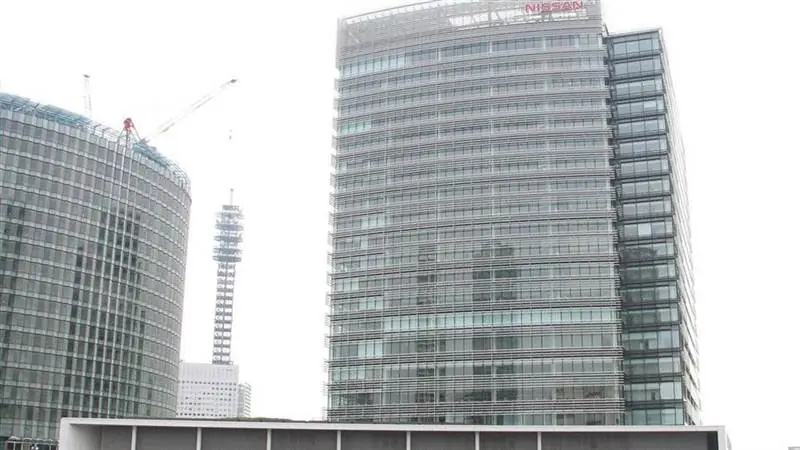
Nissan has staked a significant part of its electric future on a technology most carmakers still keep behind laboratory doors. At its Yokohama plant, the company has built and activated a pilot production line for all-solid-state batteries, a dedicated facility where engineers are rehearsing every step of a manufacturing process that no automaker has yet mastered at scale. According to Japanese media reports, the line began operating in January 2025, and the site is reportedly a dedicated facility of about 10,000 square meters.
The choice of Yokohama is fitting. Nissan's engineering home has hosted battery research since the era of the original LEAF, and the company likes to note that it was developing lithium-ion cells for cars three decades ago. The pilot line extends that lineage into the chemistry widely viewed as the next great leap: a cell with no liquid electrolyte, no separator and fundamentally different limits on range and charging.
Why All-Solid-State Matters to Nissan
Removing the liquid electrolyte changes the physics of a battery. Ions move through a solid medium that is stable at higher temperatures and voltages, allowing denser packing of active material. Nissan has set a volumetric energy density target of about 1,000 watt-hours per liter for its cells, roughly double what its current liquid-electrolyte technology stores in the same volume, according to the company's public roadmap.
Doubling density per liter is the packaging jackpot. It means a battery the size of today's pack could drive roughly twice as far, or a half-size pack could deliver today's range while freeing cabin and cargo space. Nissan has also suggested that its solid-state cells could charge around three times faster than current technology, with media reports citing an ability to recover about 65 percent of charge in roughly five minutes under favorable conditions.
A Thirty-Year Battery Pedigree
Nissan is careful to remind audiences that it has been here before. When the company unveiled its Ambition 2030 vision in November 2021, then-CEO Makoto Uchida announced plans to introduce a breakthrough all-solid-state battery by 2028, with a pilot plant in Yokohama to be ready by 2024, and framed the effort as the next chapter in three decades of in-house lithium-ion development for automotive use. The company notes that it has shipped safe batteries with zero incidents across that history, a record it wants to carry into the new chemistry.
The schedule has since slipped by roughly a year on each milestone, as reporting on Nissan's roadmap makes clear: the pilot line that was once promised for 2024 began operating in January 2025, and the launch window that was first sketched as 2028 for series production now reads fiscal 2028 for market introduction with volume production in 2029. Slower than hoped, perhaps, but unusually concrete for a technology most rivals describe only in PowerPoint.
The Road From Pilot to Product
Nissan's published schedule points to market launch in fiscal year 2028, which runs from April 2028 to March 2029, with series production following in 2029. The spring 2024 roadmap describes the interim steps: pre-series production at the Yokohama line through 2025 and beyond, then an expansion from fiscal 2028 in which around 100 workers per shift would lift pilot output to roughly 100 megawatt-hours per year. Those are small volumes by battery standards, but they are the proving ground for mass production.
Progress reports have been encouraging. In late 2025, the Nikkei business daily reported that Nissan's prototype solid-state cells had met the performance targets the company had set for market introduction, with the remaining challenge being to stabilize results and scale up without losing quality. Further reports in 2026 indicated the company had confirmed a multi-layer prototype pack, an important step toward automotive modules, though details remain limited.
Partners, Process and the Dry Electrode Edge
One of Nissan's boldest moves came in August 2025, when it introduced LiCAP Technologies, a US-based specialist, as a partner for dry electrode processing. Conventional electrode coating requires energy-hungry solvent drying ovens; dry processing skips the liquid entirely, and Nikkei reported that the partner's technology was decisive in allowing the latest prototype cells to meet their performance targets. The process is considered key to producing large-format solid-state electrodes quickly and reliably.
The chemistry Nissan is pursuing pairs lithium-metal or high-nickel cathode concepts with sulfur-based solid electrolytes. Such cells are sensitive to pressure and moisture, which is why the pilot line's real product is know-how: lamination techniques, stack pressure control, yield management and the dozens of small process tricks that separate a working sample from a million-unit supply chain.
Cost Targets That Would Change the Math
Nissan's ambitions extend to price. According to the Nikkei report, the company aims to bring solid-state packs down to 75 dollars per kilowatt-hour, about 30 percent below the average battery pack price reported globally for 2024, and eventually toward 65 dollars per kilowatt-hour as the process matures. Achieving either figure would make solid-state competitive with today's conventional packs, removing the cost penalty that has always shadowed next-generation chemistry.
The intended applications are deliberately unglamorous. Nissan has said the batteries will appear across a variety of vehicle segments, including pickup trucks, where durability, fast charging and volume efficiency matter more than sports-car theater. Commercial and recreational pickups are also punishing duty cycles, so the choice doubles as an engineering credibility test.
How Nissan Stacks Up
The Japanese competition is close behind or ahead depending on the metric: Toyota targets 2027 to 2028 with Idemitsu's electrolyte supply chain, Honda runs its own demonstration line, and Samsung SDI plans production for 2027. Nissan's fiscal 2028 window sits a step later, but the company controls its own cell development, its pilot line is running, and its cost targets are aggressive.
For a company rebuilding its product lineup, the prize is obvious: an electric pickup that charges in minutes, drives twice as far per liter of battery, and costs no more to equip than today's EVs. The Yokohama pilot line is where that bet gets tested, one carefully manufactured cell at a time.