The EU Gives Carmakers Three Years to Meet 2025 CO2 Goals
A target that nearly broke the market
From January 2025, every carmaker selling in the European Union had to cut the average CO2 emissions of its new car fleet by 15 percent against the 2021 baseline — a hard ceiling of 93.6 grams of CO2 per kilometre for cars, with vans at 153.9 grams per kilometre, under Regulation (EU) 2019/631. Miss the number and the fines are automatic: 95 euros for every gram over the limit, multiplied by every vehicle registered. For a large manufacturer missing by a few grams across a million-car fleet, the exposure ran into the billions of euros.
The problem was timing. Electric vehicle sales in Europe were growing but not fast enough for every brand to clear the bar in a single year. Analysis by the International Council on Clean Transportation put the 2024 fleet average at around 108 grams per kilometre for cars, implying that without relief several manufacturers faced penalties in the billions. The stage was set for the most consequential lobbying fight of Europe's EV transition.
March 2025: the flexibility deal
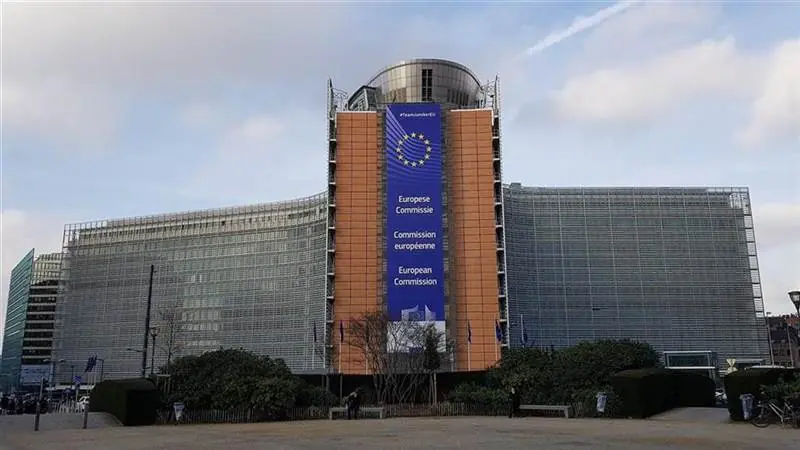
On March 5, 2025, the European Commission answered with a targeted amendment to the CO2 standards, announced as part of its Industrial Action Plan for the automotive sector. Commission President Ursula von der Leyen framed it plainly: instead of annual compliance, companies would get three years. The targets themselves would not move, she said, but the mechanism for meeting them would, offering what she called more breathing space and more clarity for industry, according to the Commission's remarks reported by Fleet News.
The change followed a Strategic Dialogue on the Future of the Automotive Industry that von der Leyen launched on January 30, 2025, and it was pushed hardest by Germany, Europe's largest car-producing country, with Spain among the member states backing the softer compliance path. The formal legislative proposal landed on April 1, 2025.
How the averaging works
The mechanism is simple in principle. A manufacturer's fleet emissions for 2025, 2026 and 2027 are measured as a three-year average rather than year by year. Overshooting the target in one year can be offset by over-compliance in another, so a brand that sells fewer EVs than planned in 2025 can make up the ground with cheaper electric models launched in 2026 or 2027. The Commission describes it as a temporary flexibility for this period; annual compliance returns in 2028, when the next tightening step — a 55 percent cut for cars by 2030, equivalent to about 49.5 grams per kilometre — comes into view ahead of the 2035 zero-emission mandate.
Everything else stays in place. Pooling, eco-innovation credits and the 95-euro penalty rate all carry over, so a manufacturer that cannot reach the three-year average still pays, on the same terms as before.
A fast-track through Brussels
The amendment moved through the EU's legislative machinery at unusual speed. The European Parliament adopted it under urgent procedure on May 8, 2025, with 458 votes in favour, 101 against and 14 abstentions, according to the Parliament's legislative observatory. The Council agreed its position without modifications on May 7 and formally adopted the act on May 27, 2025. The final regulation was signed on June 17, published in the Official Journal on June 19, and entered into force on July 9, 2025 — barely four months from proposal to law.
What it changes — and what it does not
Critics were quick to argue that flexibility invites delay. The campaign group Transport and Environment and the industry association E-Mobility Europe both warned that averaging would slow EV launches in the near term, with E-Mobility Europe estimating that as many as half a million fewer electric cars could reach EU roads in 2025 than under strict annual compliance. Defenders countered that the alternative — punishing manufacturers for a market dip they could not control — would only feed backlash against the whole transition.
The flexibility also set a precedent. In December 2025, the Commission's Automotive Package went further, proposing to soften the 2035 endgame itself from a 100 percent CO2 reduction to 90 percent, with the remainder offset through low-carbon steel, e-fuels and biofuels, alongside a second averaging window for 2030-2032. Those proposals remain under negotiation between the Parliament and member states, but they show the direction of travel: the EU is keeping its climate targets while steadily loosening the ratchet that enforces them.
The road to 2030
For carmakers, the three-year window converts a cliff edge into a ramp. Brands with strong electric line-ups arriving in 2026 and 2027 — including a wave of affordable European-built models below 25,000 euros — can borrow time now and repay it later. For the EU, the deal preserved the headline numbers that anchor its Fit for 55 climate commitments while acknowledging the slower EV market those numbers were supposed to create.
The real test arrives with the 2027 accounting. If fleet averages land on target, the flexibility will be remembered as pragmatism that saved the policy; if they drift above it, the averaging deal may be seen as the moment Europe's car CO2 rules first bent under pressure — with the 2035 debate already proving that bending is easier than it used to be.