India's New EV Policy Opens the Door to Global Brands

A tariff wall with a new gate
India is the world's third-largest automobile market, yet imported cars have long faced some of the steepest duties anywhere: until recently, buyers paid taxes of roughly 70 percent or even 100 percent depending on a car's value, according to India's Ministry of Commerce and Industry announcements and press reporting. That wall kept most global EV makers out and protected a domestic industry led by Tata Motors and Mahindra. In March 2024, New Delhi decided to open a gate in it — carefully, and for a price.
On March 15, 2024, the Union government approved a policy designed, in its own words, to promote India as a manufacturing destination for electric vehicles by reputed global manufacturers. The scheme was later finalized by the Ministry of Heavy Industries as the Scheme to Promote Manufacturing of Electric Passenger Cars in India, or SPMEPCI, with detailed rules issued through 2025, according to Autocar India.
The fine print
The core bargain: cut import duties dramatically, but only for companies that build factories in India. Per the government's March 2024 press release, the terms include:
- A 15 percent customs duty — the rate normally applied to knocked-down kits — on imported EVs with a minimum CIF value of 35,000 dollars, for five years
- A minimum investment of 4,150 crore rupees, about 500 million dollars, with no cap on the maximum
- Three years to set up manufacturing facilities and begin commercial production
- Domestic value addition of 25 percent by year three, rising to 50 percent by year five
- An import cap of 8,000 vehicles per year, up to 40,000 total for investments of 800 million dollars or more
The duty foregone on those imports is capped at the lower of the company's investment or 6,484 crore rupees — the value of the incentive under India's existing auto production-linked incentive scheme — and every commitment must be backed by a bank guarantee that can be invoked if localization targets are missed, according to the Press Information Bureau. Cars priced below the 35,000-dollar threshold, and any imports beyond the quota, still attract the full rate, which the finalized scheme puts at about 110 percent.
The scheme also sets progressive annual revenue milestones for participants and restricts eligibility to established automakers with global scale, rules that the heavy industries minister said had already drawn formal interest from Hyundai, Kia, Mercedes-Benz, Skoda and Volkswagen, per Autocar India.
The guidelines are precise about what counts as investment. Manufacturing equipment, research and development facilities and charging infrastructure — capped at 5 percent of the total — all qualify toward the floor, as do land and buildings up to 10 percent when they form part of the main plant, according to the scheme guidelines reported by Autocar India. Automakers may also set up assembly within existing plants rather than building from scratch, which lowers the entry cost for brands already producing conventional cars in India.
Tesla lands in Mumbai
The policy's most famous would-be beneficiary chose a different door. Tesla, which had lobbied India for years over import duties, opened its first Indian showroom in Mumbai's Bandra Kurla Complex on July 15, 2025, and began selling the Model Y as a direct import from its Shanghai factory, according to Tesla's India website and Indian press reports. Prices opened at about 59.89 lakh rupees for the standard version and 67.89 lakh rupees for the long-range variant — roughly 70,000 dollars, among the highest Model Y prices in the world — reflecting the roughly 70 percent tariff and tax burden on fully built imports.
The gamble has been modest so far. Reports in India's financial press indicated Tesla had received only around 600 orders in the first weeks of sales, and the company confirmed deliveries would initially be limited to Mumbai, Delhi, Pune and Gurugram. India's heavy industries minister said publicly in mid-2025 that Tesla was not seeking to manufacture in India and was expected to pay the full 110 percent tariff, according to Autocar India. Tesla has, however, laid charging groundwork, with plans for 16 Supercharger stations, starting with eight around Mumbai and Delhi.
The car itself is familiar showroom hardware, priced for a premium niche. The standard Model Y is rated at up to 500 kilometres of range on the WLTP cycle and the long-range version at 622 kilometres, and Tesla backs the car with a four-year, 80,000-kilometre vehicle warranty and an eight-year battery and drive-unit warranty, per Indian launch coverage by MotorBeam. The company is targeting buyers cross-shopping BMW, Mercedes-Benz and Volvo electric SUVs rather than the compact models that dominate Indian sales, a beachhead strategy that tests the market's ceiling before committing to anything local.
Why it matters
The policy's logic is less about the first few thousand imported cars than about what follows them. By pairing a taste of the premium import market with hard localization deadlines, India is trying to do for electric cars what it did for smartphones: convert foreign interest into domestic factories. For Tata, Mahindra and other local players, the arrival of global competition is a challenge — but also a signal that India's small premium EV segment, barely a sliver of a market that sells over four million cars a year, is finally worth fighting for.
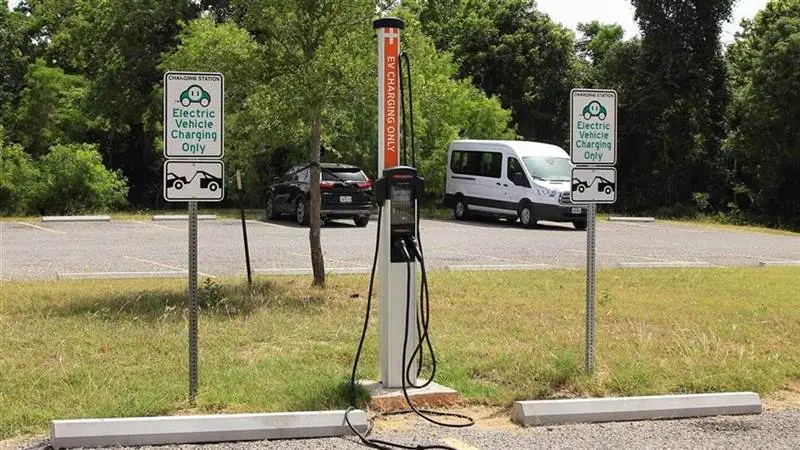
The stakes extend beyond passenger cars. India's public charging network remains thin, and the policy is designed to pull that ecosystem forward too: charging infrastructure counts toward the investment floor, and global entrants arrive with capital, standards and software. If even two or three of the interested brands commit to local assembly, India gains pack plants, supplier networks and thousands of jobs — the same sequencing that turned it into a smartphone export hub within a decade.
For global brands, the math is unusual but not unattractive: 500 million dollars buys access to a fast-growing market at a duty rate a tenth of the old wall, provided they are willing to build. Whether the gate stays open depends on who walks through it — and how many choose manufacturing over mere imports.