Tesla's Superchargers Open Up to Rival EVs
From moat to commons
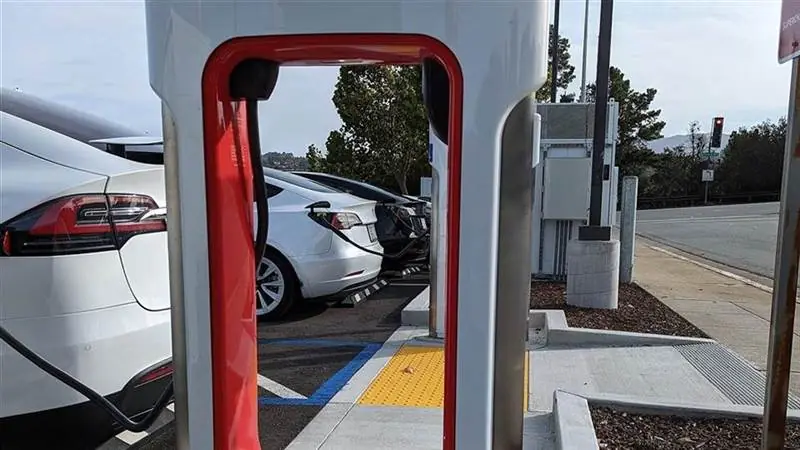
For most of the electric vehicle era, the Supercharger network was Tesla's quiet competitive weapon: fast, abundant and exclusive to the brand. That exclusivity is now gone. Beginning in early 2024, Tesla began admitting rival electric vehicles to its North American fast-charging network, starting with Ford at the end of February 2024, followed in short order by Rivian and General Motors, according to a Tesla program page and reporting by InsideEVs. What began as a handshake with one Detroit automaker has grown into the largest interoperability move in the industry's history.
The scale of the opening is easy to underestimate. According to Tesla, the network currently counts more than 36,500 stalls reserved for Tesla vehicles, more than 25,000 stalls open to other EVs equipped with the North American Charging System connector, and over 2,400 stalls fitted with the built-in adapter known as the Magic Dock. Tesla also claims Superchargers make up roughly three out of every four fast chargers in North America and deliver 99.95 percent uptime, figures that explain why access was such a selling point for Tesla buyers in the first place.
How access actually works
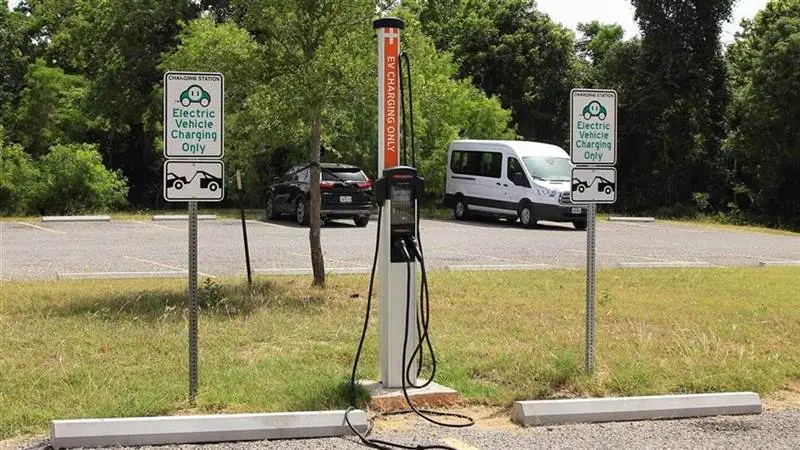
Access is staged rather than universal. Only Supercharger stalls of the newer V3 and V4 generations — identifiable by the dark collar around the charging handle — can serve non-Tesla vehicles, so a rival-brand driver needs to filter locations in the Tesla app before setting out. Charging is initiated and paid for in the Tesla app, which handles payment and shows live stall availability, and Tesla offers discounted membership pricing for drivers who charge frequently.
For vehicles that still carry the older CCS1 port, an adapter is required. The specifics differ by manufacturer: some automakers, including Hyundai and Genesis, have distributed free adapters to their owners, while others sell them, and Tesla's own adapter retails for around 230 dollars, according to industry guides. Tesla's Magic Dock stalls sidestep the problem entirely by integrating the adapter into the stall itself, allowing any CCS1 vehicle to plug in without extra hardware.
Who is in — and who is still out
The list of brands with Supercharger access has grown to more than twenty. According to Tesla, drivers from the following manufacturers can now use the network with an adapter or a native port:
- Ford, General Motors and Rivian, the first three adopters
- Hyundai, Kia and Genesis
- Toyota, Honda, Acura, Nissan and Subaru
- Mercedes-Benz, BMW, Audi, Porsche and Volkswagen
- Volvo, Polestar, Lucid, Jaguar Land Rover and Stellantis
That roster covers the overwhelming majority of the United States EV market. Adoption of the underlying connector has been just as sweeping: the plug Tesla published to the industry in November 2022 was formalized as SAE J3400, with the Society of Automotive Engineers issuing a technical information report in December 2023, and by early 2024 companies representing roughly 99 percent of the US EV market had announced plans to adopt it, according to Charging Interface Initiative summaries.
Native ports replace adapters
The adapter era is already receding. The 2025 Hyundai Ioniq 5 became the first non-Tesla vehicle sold in America with a native NACS port, and models from Kia, General Motors, Rivian and others have followed. Automakers are transitioning at different speeds, so showrooms currently mix CCS1 and NACS vehicles, but the destination is clear: new EVs that plug into Superchargers without any adapter at all, while using a cheap NACS-to-CCS1 adapter for the shrinking universe of legacy fast chargers.
The transition has not been friction-free. Adapter supplies lagged demand through much of 2024 and 2025, leaving some Ford and GM owners waiting months for hardware, per Consumer Reports. Charging speeds for adapter-equipped cars can also fall short of Tesla's, because several CCS1 vehicles convert power differently than Teslas do. And Superchargers remain a North American phenomenon: Tesla's network in Europe and China runs on different connectors, so nothing comparable has opened there.
Why Tesla opened up
The motives point in the same direction from both sides. Rival automakers gained relief from their weakest link — public charging reliability — while Tesla turned a cost center into a revenue stream and qualified its connector to become the national standard, which also made its chargers eligible for federal NEVI funding. Tesla says Superchargers were always intended to serve all EV drivers; the more candid arithmetic is that every rival car charging at a Tesla stall now pays Tesla for electricity.
Competition is arriving nonetheless. The IONNA network, founded by eight major automakers, is expanding with high-power stalls of its own, and operators such as Electrify America and EVgo continue to add both CCS1 and NACS connectors. Yet reliability reputations move slowly, and Tesla's head start remains large.
What it means for drivers
For anyone shopping for a non-Tesla EV in 2026, the practical answer to the old question — where will I charge on a road trip? — has changed. Most new electric models can now plan routes around the densest fast-charging map on the continent, and the psychological barrier that kept many buyers loyal to Tesla has weakened accordingly.
The deeper significance is standardization. North America spent a decade split between incompatible plugs; it now converges on one, with Tesla's design as the winner. That convergence will not make every charger work perfectly tomorrow, but it removes the single most confusing choice an EV buyer had to make. The Supercharger network that once defined Tesla's moat has become the industry's common ground — and Tesla, collecting revenue from rivals at every stall, seems entirely comfortable with the trade.