The Best-Selling EVs in America in 2025
A Strange, Policy-Shaped Year
The 2025 US electric vehicle market ended almost exactly where it began — and yet almost nothing about the year felt stable. Americans bought roughly 1.28 million EVs in 2025, down 2.0 percent from 2024, according to Kelley Blue Book estimates from Cox Automotive, giving battery power a 7.8 percent share of new-vehicle sales. That made 2025 the second-best year for EV sales on record, even as the market rode a roller coaster engineered in Washington.
Buyers rushed showrooms in the third quarter to claim the 7,500-dollar federal EV tax credit before it expired on September 30, producing a record stretch of sales. Then the floor fell out: fourth-quarter EV sales fell 36 percent year on year to 234,171 units, per Cox Automotive, and December's 84,000-plus deliveries — the best month after the expiry — leaned heavily on automaker incentives that Kelley Blue Book estimated at a record 18 percent of transaction prices for EVs.
Model Y: Four Straight Years on Top
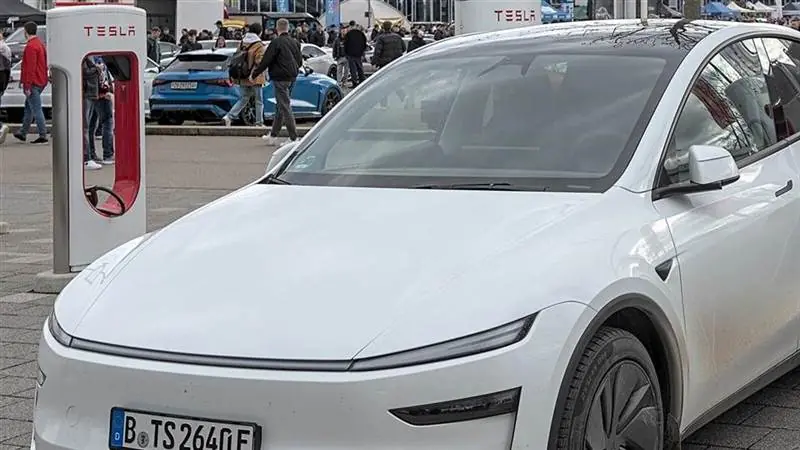
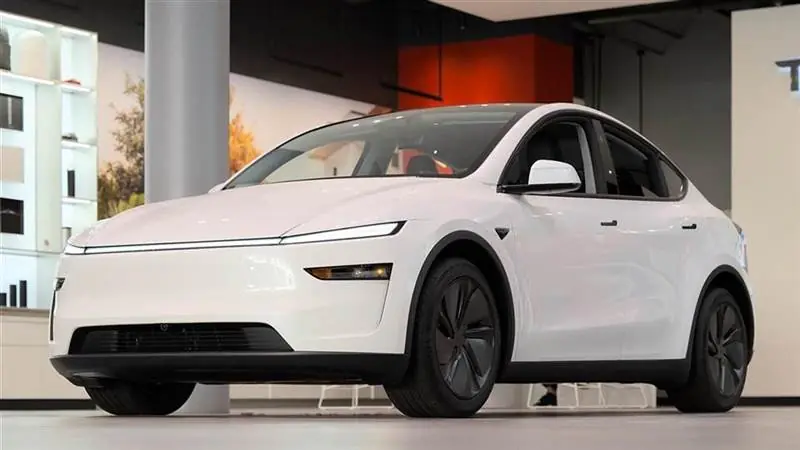
Tesla's Model Y finished 2025 as America's best-selling EV for the fourth consecutive year, with 357,528 units sold, according to Kelley Blue Book — a decline of 4.0 percent that the company absorbed while retooling Fremont and Texas for the refreshed crossover. Even with that dip, the Model Y alone accounted for about 28 percent of every EV sold in the United States, a share no rival approached.
The Model 3 held second place with roughly 190,000 sales, up 1.3 percent, the only Tesla sedan in a growth year after the launch of cheaper Standard trims late in the year. Tesla's brand total came to 589,160 EVs, down 7.0 percent, for a 46.2 percent share of the US EV market, per Kelley Blue Book — still a commanding lead, but a reminder that the company's cheaper trims carried the year while its expensive models sagged. The Cybertruck managed 20,237 sales, and the Model S and X continued long declines.
Equinox EV: The Best-Seller Not Named Tesla
The story of the year sat third on the chart. The Chevrolet Equinox EV sold 57,945 units in 2025, up 100.7 percent, according to Kelley Blue Book — making it the best-selling EV in America from any brand other than Tesla, and one of the most affordable electric crossovers on the market. Ford's Mustang Mach-E, the former champion of that category, trailed at 51,620 units, essentially flat year on year.
The Equinox powered a broader GM surge. General Motors sold 169,887 EVs in 2025, up 48 percent, claiming 13 percent of the EV market and a firm grip on second place among brands. "GM has clearly established its position as the market's EV leader not named Tesla," Kelley Blue Book analysts wrote. Cadillac added luxury credibility with 49,152 EVs, including 20,971 Lyriqs, while the Chevrolet Blazer EV added 22,637 sales — giving GM four of the fifteen best-selling EVs in the country.
The Rest of the Top Ten
Hyundai's Ioniq 5 ranked fifth among EVs with 47,039 sales, up 6.0 percent, per Kelley Blue Book, even as production began shifting to the new Metaplant in Georgia. Honda's Prologue, effectively a GM-built sibling in spirit to the segment's crossover formula, took sixth among non-Tesla models with 39,194 units, up 18.7 percent. Ford's F-150 Lightning fell 18.5 percent to 27,307 amid Ford's later decision to rethink its electric truck program, and Rivian's R1S SUV posted 24,852 sales, down 7.7 percent.
The top ten closed with the Blazer EV and the Volkswagen ID.4, which rebounded 31.4 percent to 22,373 units as VW's EV push regained traction. Further down, the scoreboard was less kind to Korean-brand volume: Kia's US EV sales slid 39.7 percent to 33,836 units, with the EV6 down 40.4 percent despite a refresh, according to Kelley Blue Book — proof that the post-credit market punished brands without deep local production or entry pricing.
The luxury ranks split sharply. Cadillac's EV sales jumped 69.1 percent to 49,152 units on the strength of the Lyriq, Escalade IQ and new Vistiq, while Porsche more than doubled to 14,107 and Volvo nearly doubled to 10,821 behind its flagship EX90, per Kelley Blue Book. Audi gained 30.5 percent to 30,214 on a wave of new Q6 e-tron volume. Mercedes-Benz went the other way, collapsing 54 percent to 12,942 sales as it pulled the poorly received EQE and EQS from the US market — evidence that in 2025, product choice mattered more than badge prestige.
Tesla's Share Slips as Rivals Multiply
Zoom out, and 2025 marks the year Tesla's dominance stopped being absolute. Its 46.2 percent EV share was down from about 48.7 percent in 2024, even after pricing moves and the Standard trims. The Model Y and Model 3 together accounted for roughly 43 percent of all US EV sales — enormous, but a number that shrinks a little every time GM opens another Equinox allocation or Hyundai cuts a price. Among brands, GM's 13 percent share dwarfed Ford's 6.6 percent, Hyundai's 5.2 percent and Rivian's 3.3 percent, per Kelley Blue Book.
The fourth quarter told the story in miniature. With the credit gone and the whole segment down 36 percent, Tesla's share of the shrunken pie actually rebounded to 58.9 percent of Q4 EV sales, according to Kelley Blue Book — rivals with fresh lineups simply had more ways to lose volume when demand evaporated. Resilience in a downturn, not just share in a boom, is now the test every EV brand in America has to pass, and 2025 provided the first honest measurement.
Cox Automotive's outlook around the start of 2026 anticipated only modest movement in BEV share, around 8 percent; that is a forecast rather than an observed full-year result. New entries such as the Chevrolet Bolt and redesigned Nissan Leaf broaden the choice at the affordable end, but launch prices, trim availability and delivery dates need checking separately. The next sales ranking will reflect a mix of pricing, incentives, financing, supply and consumer preferences. The 2025 table alone cannot establish how much each factor will contribute.