BYD Edged Tesla in April 2025 European BEV Registrations
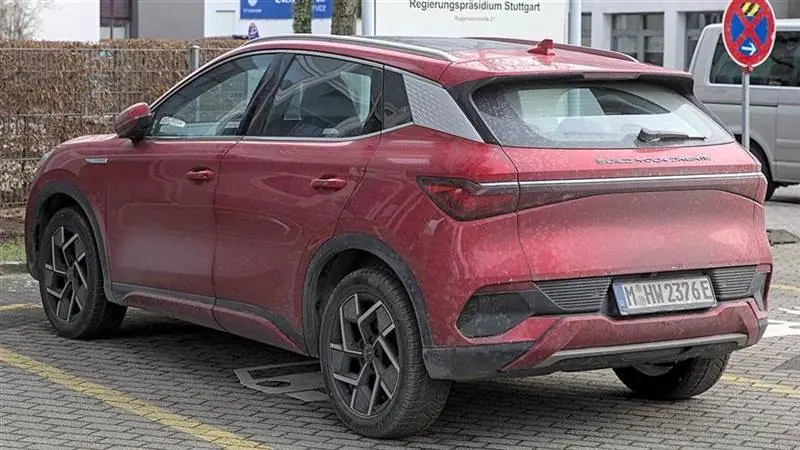
A 66-Car Gap in a Monthly Registration Snapshot
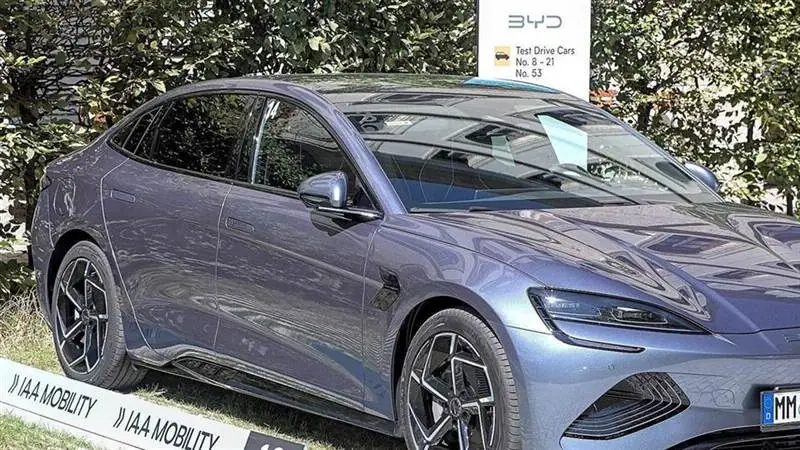
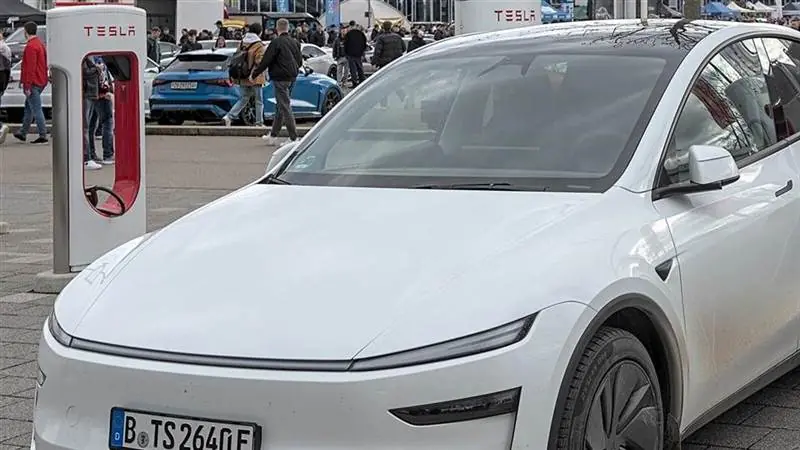
In April 2025, Europe's electric vehicle market crossed a line that seemed implausible only two years earlier. According to JATO Dynamics data covering 28 European markets, BYD registered 7,231 battery-electric cars that month against 7,165 for Tesla — the first time the Chinese manufacturer outsold the American pioneer in Europe on pure electrics. BYD's BEV registrations surged 169 percent year on year while Tesla's plunged 49 percent, and including plug-in hybrids, BYD's total volume grew 359 percent.
The margin was just 66 cars, but analysts treated it as a turning point rather than a statistical fluke. "Although the difference between the two brands' monthly sales totals may be small, the implications are enormous," said Felipe Munoz, global analyst at JATO Dynamics, calling it "a watershed moment for Europe's car market." Tesla had led European BEV sales for years; BYD only began selling beyond Norway and the Netherlands in late 2022.
One snapshot deserved context, though. As commentary at the time noted, Tesla was still comfortably ahead of BYD across Europe through the first four months of 2025, and S&P Global Mobility analysts entered the year expecting BYD to roughly double its European volume to around 186,000 units. What made April special was the direction of travel: a brand that had barely registered in Europe three years earlier was suddenly trading monthly wins with the market's long-time leader — and, as the rest of 2025 showed, it was not slowing down.
How BYD Caught Up
BYD's advance was built on breadth and price. Its European lineup expanded quickly from the Atto 3 SUV to the Dolphin, Seal and Seal U, and in May 2025 the brand launched the Dolphin Surf, a city car derived from its best-selling Chinese model, with a starting price of 19,990 euros according to BYD — undercutting the Volkswagen ID.3, which begins at around 30,000 euros. That aggressive pricing, combined with BYD's in-house Blade batteries, gave the brand a cost advantage few incumbents could match.
Plug-in hybrids did much of the early heavy lifting. JATO recorded a 546 percent year-on-year jump in Chinese-brand PHEV registrations in April 2025, to 9,649 units, as BYD and rivals leaned on models not covered by the EU's tariffs on China-built BEVs. BYD's momentum also showed up at the country level: JATO noted it outsold Fiat, Dacia and Seat in the UK, Fiat and Seat in France, and Seat in Italy — before a single European-built BYD had left a factory line.
Tesla's Rough Spring
Tesla's slide was just as dramatic as BYD's rise. April 2025 was the brand's weakest month in years, with the Model Y — still Europe's familiar best-seller — falling to ninth place among BEVs with 4,495 registrations, down 53 percent, per JATO. The Model 3 managed 2,604 units, down 41 percent. Reporting at the time pointed to an aging lineup in mid-transition, production changeovers for the refreshed Model Y, and a consumer backlash in Germany and elsewhere tied to CEO Elon Musk's political activities.
The wider market was hardly shrinking. Volkswagen led all brands with more than 23,500 BEV registrations in April, up roughly 60 percent, and the Škoda Elroq topped the model ranking for the first time with about 8,000 units. Battery electrics and plug-in hybrids together took a record 26 percent of European registrations that month, and registrations of Chinese-made EVs across all brands rose 59 percent to nearly 15,300 units, according to JATO — evidence that the Chinese advance was broader than one company.
Building in Europe to Beat Tariffs
The backdrop to the sales race was a trade fight. Since October 2024, the EU has imposed definitive countervailing duties on BEVs made in China — 17 percent for BYD on top of the standard 10 percent import duty. BYD's response was to move production to the customer: its plant in Szeged, Hungary, a project it says involves roughly 4 billion euros of investment with planned capacity of up to 300,000 vehicles a year, began trial production in early 2026, with volume output targeted for late 2026, according to Reuters. BYD also moved its European headquarters to Hungary.
The second leg of the manufacturing plan has proved shakier. The 1-billion-dollar plant in Manisa, Turkey, announced with fanfare in July 2024, had reportedly been shelved by mid-2026, with BYD executive Stella Li telling Reuters that Hungary was the priority and that the company was hunting for an existing European facility as its second site — with Spain repeatedly mentioned as a contender for a third. For BYD, building in Europe is about more than avoiding duties; it converts the company from an importer into a local manufacturer just as its volumes justify the bet.
From Showrooms to Scale
Distribution grew almost as fast as the product range. BYD's regional managing director for Europe, Maria Grazia Davino, said the brand would end 2025 with about 1,000 points of sale across the continent and double that to 2,000 by the end of 2026, according to Reuters. The results followed: JATO data showed BYD's combined BEV and PHEV registrations more than tripling to 80,807 units in the first nine months of 2025, and registration data cited by industry trackers put the full-year total at roughly 187,000 — up more than 260 percent year on year.
Those volumes flipped national scoreboards, too. Data reported by trade media put BYD ahead of Tesla for the full year in Germany, roughly 23,300 registrations to 19,400, and in Britain, about 51,400 to 45,500, while Tesla's European sales reportedly fell around 27 percent in 2025. None of this made BYD Europe's biggest EV seller — Volkswagen retained that crown comfortably — but it ended any argument about whether Chinese brands were a lasting factor in the region.
What Comes Next
By 2026 the rivalry had moved from sales charts to institutional politics: BYD reportedly applied to join the European Automobile Manufacturers' Association in April 2026, a first for a Chinese automaker, according to Bloomberg. Europe's BEV market keeps expanding, giving room for several winners — but the April 2025 overtake is likely to be remembered as the moment the European EV hierarchy stopped being written in California, and started being written in Shenzhen as well.