The Chevrolet Bolt Returns for 2026 as an Affordable EV
The people's EV comes back
When Chevrolet ended production of the original Bolt EV and EUV after the 2023 model year, it retired the best-selling non-Tesla electric cars in the United States, a pair of budget-friendly hatchbacks that had found 62,045 buyers in their final year alone, according to Car and Driver. The Bolt was never profitable for General Motors, and its slow 55-kilowatt charging speed had become a genuine liability. But it was also the EV that ordinary Americans could actually afford, and GM repeatedly promised the nameplate would return.
That promise arrived on October 9, 2025, when Chevrolet revealed the next-generation Bolt as a 2027 model year vehicle. Production began at GM's Fairfax Assembly Plant in Kansas City, Kansas, in late 2025, the first cars shipped to dealers in January, per Car and Driver, and by April 2026 GM confirmed the Bolt was officially back on dealer lots nationwide. So while the new car wears 2027 model year badges, 2026 is the year it returned to the market, at a price that made it instantly notable.
The price is the headline
GM announced a starting MSRP of 28,995 dollars for the 2027 Bolt LT, destination charge included, which the company says makes it America's most affordable EV, according to GM's April 2026 release. Chevrolet's configurator lists the LT from 27,600 dollars before the 1,395-dollar destination fee, and the sportier RS trim starts at 31,600 dollars per the configurator. At launch, Chevrolet had quoted the initial LT with the Comfort package at 29,990 dollars, according to Car and Driver's report on the reveal.
That price matters more in 2026 than it would have two years earlier. The 7,500-dollar federal EV tax credit expired on September 30, 2025, removing the subsidy that had propped up most American EV deals, and sticker prices now carry the full weight of the purchase decision. GM also says the Bolt's up-to-262-mile EPA-estimated range is the most of any EV under 30,000 dollars, per its announcement.
A new battery chemistry
Underneath, the new Bolt moves from the old car's proprietary platform to technology derived from GM's newer Ultium-based EVs. It carries a 65-kWh lithium iron phosphate battery, a chemistry that costs less to produce and tolerates more charging cycles than the nickel-cobalt packs in most Ultium cars, though it is less energy-dense, per Car and Driver. GM says the pack is temporarily sourced from an unnamed foreign supplier until domestic LFP cell production ramps up, while the battery packs themselves are assembled at GM's Spring Hill, Tennessee plant.
The range numbers reflect the trade-off. Early estimates from the October 2025 reveal put the car at 255 miles of EPA range, and GM's final figure came in at up to 262 miles, a modest gain over the old Bolt EUV's 247 miles. The headline improvement is elsewhere: peak DC fast charging jumped from 55 kW to 150 kW, and GM estimates a 10-to-80-percent charge takes about 25 minutes at a public fast charger, more than twice as fast as the old car could manage.
A Tesla-style port and hands-free driving
The 2027 Bolt is also the first Chevrolet with a native NACS charge port, the Tesla-designed connector that has become the North American standard, according to GM. That means Supercharger access without an adapter, a meaningful quality-of-life upgrade for an affordable city car. GM has also equipped the Bolt with vehicle-to-home bidirectional charging capability, letting the car power a house during an outage, and plug-and-charge authentication that launches with EVgo, per the company and Car and Driver.
Available Super Cruise makes the Bolt, by GM's accounting, the most affordable vehicle in America with hands-free driver assistance on compatible highways, a feature usually reserved for much more expensive vehicles. The cabin pairs an 11.3-inch touchscreen running Google built-in with an 11-inch driver display; as with other GM EVs there is no Apple CarPlay or Android Auto, a policy that remains controversial among buyers. The front-drive motor produces 210 horsepower, borrowed from the Equinox EV, per Car and Driver.
Why the Bolt matters
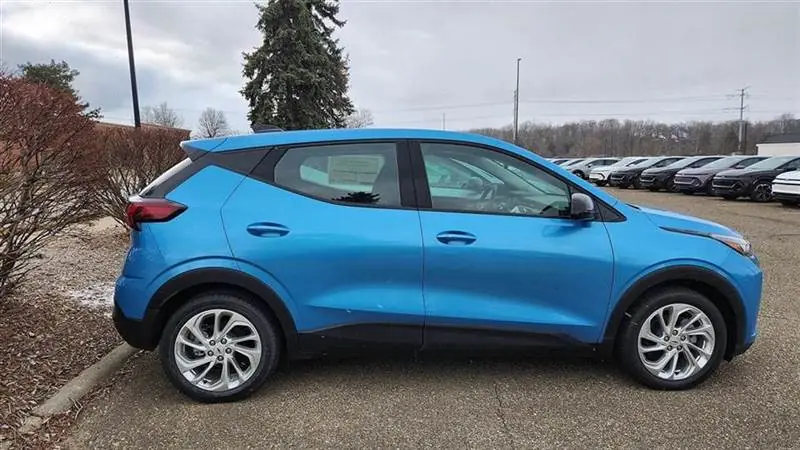
Styling stays close to the old Bolt EUV, an evolutionary update with slimmer lights and sharper trim rather than a revolution, and Chevrolet has described the new Bolt as a limited-run model, according to Consumer Reports, without saying how long it will stay on sale. Those caveats aside, the return fills the cheapest end of a US EV market that is thinning out after the end of federal incentives, where several budget models have quietly disappeared.
The Bolt's competition now includes the redesigned Nissan Leaf and the larger Equinox EV, but nothing else undercuts its price with comparable range and charging. For GM, the car is a bridge product: proof that the company can build a genuinely affordable EV on modern battery technology while its LFP supply chain matures. For buyers priced out of the post-incentive EV market, it is something simpler. The cheapest new electric car in America is back, and this time it can charge at a rate that makes road trips practical.