Hyundai and Kia Keep Climbing the Global EV Ranks
A Quiet Climb Up the Global Table
Hyundai Motor Group's 2025 electric-vehicle results need to be read by brand, region and powertrain. SNE Research's February 5, 2026 release counted about 613,000 plug-in vehicles for the group, up 11.4 percent, in a series explicitly defined as battery-electric vehicles plus plug-in hybrids. It separately reported about 104,000 PHEVs within that total. The 613,000 figure is therefore not a pure-BEV total. A ranking using it must retain SNE's scope and methodology rather than mix it with a manufacturer's differently defined worldwide shipment total.
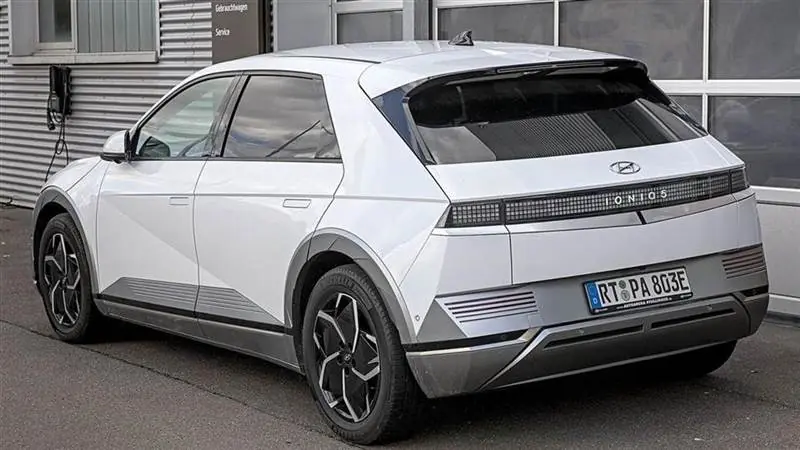
The secret is the group's much-discussed multi-powertrain strategy. In the third quarter of 2025 alone, Hyundai reported global BEV sales of 87,737 units, up 47 percent year on year, while electrified vehicles of all types — hybrids included — reached 261,495 retail units, a quarter of everything the brand sold worldwide. The flexible E-GMP electric platform underpinning the Ioniq 5, Ioniq 6, EV3 and EV6 let the company scale batteries up and down the price ladder without betting the whole business on any single technology.
The strategy shows up in the group's own numbers. Hyundai's third-quarter 2025 results captured the balance: global retail sales of 1,035,718 units, up 4.8 percent, with hybrid sales up 32 percent alongside that 47 percent BEV surge, according to the company. Management frames it as meeting customers "wherever they are in their electrification journey" — a hedge that paid off in 2025, when policy shocks whipsawed pure-EV demand in the United States while hybrids kept factory lines and dealer margins healthy.
The Kia EV3 Became the Group's Star
No product embodied the momentum better than the Kia EV3. The compact electric SUV, launched in Europe in late 2024, registered 66,571 sales across Europe in 2025 according to registration data cited by industry trackers — enough to place it among the continent's ten best-selling EVs in its first full year. In April 2025 it was the fifth most-registered BEV in Europe per JATO Dynamics, and in the first half of the year it was the best-selling retail EV in the UK, according to figures cited by Electrek.
The Netherlands showed how far the halo stretches. There, the EV3 was the second best-selling vehicle of any kind with 10,973 registrations in 2025, helping Kia beat Volkswagen, Toyota and every other brand to become the country's top-selling carmaker, according to official data from the RAI Association, BOVAG and RDC reported by Electrek. Globally, Kia said it had sold more than 75,000 EV3s in the first nine months of 2025. Starting at about 36,000 euros in Europe with up to 599 kilometers of WLTP range from its 81.4-kilowatt-hour pack, the EV3 hit the value-for-money sweet spot that mass-market buyers had been waiting for.
Ioniq 5 and the American Year
In the United States, the Hyundai Ioniq 5 stayed the group's volume champion, selling 47,039 units in 2025, up 6.0 percent, and ranking fifth among all EVs, according to Kelley Blue Book estimates. The Hyundai brand's US EV total reached 65,717 units, up 6.5 percent, helped all year by the ramp-up of the Metaplant in Georgia, where the Ioniq 5 and new Ioniq 9 are built for the local market — a hedge against tariffs that few rivals enjoy.
The fourth quarter tested that resilience. With the 7,500-dollar federal tax credit expiring at the end of September, Hyundai's US EV sales fell 53 percent in Q4, per Kelley Blue Book, and the company answered by slashing prices — cutting up to 10,000 dollars from some Ioniq 5 trims so that the 2026 model starts under 35,000 dollars, according to Electrek. The bet is that affordable pricing and American production can carry EV volume through a subsidy-free era while the group's record hybrid sales cushion the transition.
The rest of the group's American lineup added depth rather than headlines. Kia's three-row EV9 added 15,051 US sales and the refreshed EV6 another 12,933, while Hyundai's Ioniq 6 sedan managed 10,478 units, according to Kelley Blue Book — a combined showing that kept the group among the largest EV sellers in the country even in its weakest quarter, and gave it a broader electric portfolio than any non-Tesla, non-GM competitor.
Inster and the Affordable Push
Europe's real growth story for the group was small and cheap. The Hyundai Inster, a city EV launched in late 2024, registered 20,493 sales in Europe through September 2025 and was Germany's best-selling electric small car through July, according to Hyundai Motor Germany CEO Ulrich Mechau. Together with the Kia EV3, it powered Hyundai Motor Group's compact EV sales in Europe to 103,476 units in the first nine months of 2025, and the group targeted more than 200,000 EV sales in Europe for the full year, per figures cited by Electrek.
The group's European mix is electrifying faster than almost any legacy rival's. In the third quarter of 2025, 47.4 percent of the Hyundai vehicles sold in Europe were electrified — 71,040 units, up 28 percent year on year, the company reported — as hybrids and EVs together became the default showroom offering rather than the alternative.
EV5, EV4 and What Comes Next
The pipeline keeps widening. Kia's midsize EV5, built and sold in China since 2024, ranked as the fourth best-selling EV in Australia in 2025 according to market data cited by Electrek, while the EV4 — the brand's first electric hatchback — arrived alongside the EV5 in new markets late in the year. For 2026, the group plans entry-level models including the Kia EV2 and Hyundai Ioniq 3 aimed squarely at Europe's affordable segment, plus a US launch of the EV3, though Kia has indefinitely delayed the EV4 for America, according to Car and Driver.
Kia's US EV sales fell 39.7 percent to 33,836 units in 2025 in Kelley Blue Book's estimates, illustrating why a global growth figure cannot stand in for a local sales trend. Readers comparing performance should distinguish group-wide plug-in sales, brand-level regional BEV sales, and electrified sales including conventional hybrids. Growth in one does not establish leadership in the others. For buyers, the relevant follow-up is whether the local lineup, service support and quoted price meet their needs rather than which broad global ranking the manufacturer can claim.