Xiaomi's EV Business Scales Faster Than Anyone Expected
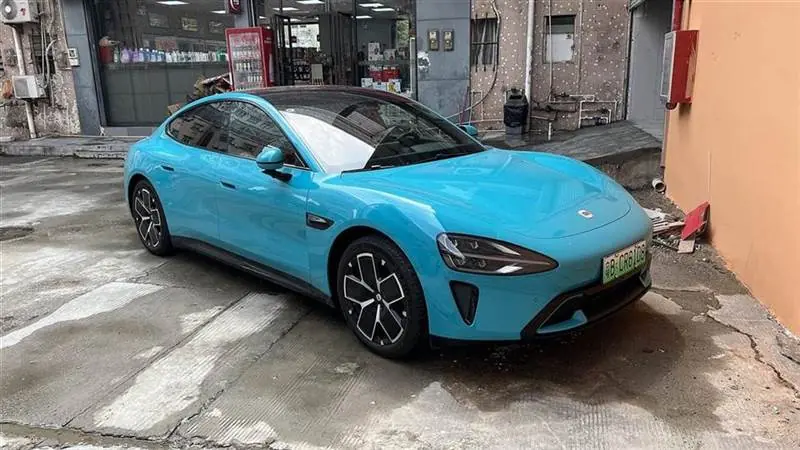
A phone company that became a carmaker in 28 months
When Xiaomi delivered its first SU7 sedans in April 2024, even optimistic observers treated the car as an experiment from a smartphone company with no automotive track record. Two and a half years later, the numbers tell a different story. According to Xiaomi's 2024 annual report, the SU7 series reached 136,854 deliveries in its first year on the market, and the company's own environmental and governance disclosures state that total deliveries rose to 411,082 vehicles in 2025. No Chinese EV startup has ever ramped this quickly.
Founder and CEO Lei Jun, who announced in 2021 that building cars would be his last major entrepreneurial project, has repeatedly revised the company's targets upward as demand outran supply. The 2024 goal started at 70,000 units, was raised to 100,000, then to 130,000. By late December 2024, Lei declared on Weibo that SU7 deliveries had passed 130,000 units in just nine months on sale, calling the pace, in his words, an absolute miracle for a newcomer.
2025: the target that kept moving
The momentum carried straight into 2025. In March of that year, Xiaomi raised its full-year delivery target to 350,000 vehicles, a figure that seemed aggressive when the company was still struggling to build enough SU7s to meet waiting lists. Yet by December 2, 2025, Xiaomi confirmed it had already passed the 350,000 mark with a month of the year to go, and said it expected full-year deliveries to exceed 400,000 units. The company also celebrated production of its 500,000th vehicle on November 20, 2025, less than 20 months after deliveries began.
December capped the year with a record: more than 50,000 vehicles delivered in a single month, the first time Xiaomi crossed that threshold, according to company announcements reported by industry trackers. Adding up the monthly figures, January through November brought 361,625 deliveries and a cumulative total of 501,096 vehicles since launch. The final audited number, published in Xiaomi's 2025 ESG report, was 411,082 vehicles for the year, roughly triple the first-year figure.
Two cars, then a lineup
The growth has rested on a rapidly expanding product range. The SU7 sedan launched on March 28, 2024, in Standard, Pro and Max trims with prices starting at 215,900 yuan, and it quickly became one of China's best-selling premium electric sedans. The high-performance SU7 Ultra followed on February 27, 2025, reportedly securing thousands of pre-orders within minutes of its debut.
The bigger volume story arrived in mid-2025. The YU7 SUV, pitched directly against Tesla's Model Y, launched on June 26, 2025, with customer deliveries starting July 6. Within six months, Xiaomi said the YU7 had surpassed 150,000 deliveries, a pace the company noted was more than double what the SU7 managed over the same period after its own launch. The SUV has kept that lead into 2026: industry data compiled by EV-focused publications shows the YU7 accounted for 114,782 deliveries in the first seven months of 2026 against 101,540 for the SU7, giving the SUV the majority share of Xiaomi's output.
The sedan itself has moved into a second generation. Xiaomi halted first-generation SU7 production in February 2026 after roughly 370,000 units and unveiled the refreshed model on March 19, 2026, with lower launch prices than its predecessor and a stronger standard equipment list. By mid-August 2026, the company announced that cumulative SU7 deliveries alone had passed 500,000 units, reached 28.5 months after the model first went on sale, and that deliveries across both nameplates had surpassed 760,000 vehicles.
From losses to profit
Scaling this fast has required enormous investment, but the financial trajectory has bent upward quickly. Xiaomi's quarterly filings show the smart EV and other new initiatives segment losing money through 2024, with the per-vehicle loss shrinking as volumes grew. According to the company's third-quarter 2025 results, the segment recorded its first quarterly profit that quarter, a milestone few predicted would arrive so soon. Lei Jun has said Xiaomi invested around 105 billion yuan in research over the previous five years and plans to spend about 200 billion yuan over the next five, with the car business central to that plan.
Distribution has scaled in parallel. As of December 31, 2025, Xiaomi operated 477 retail stores across 138 cities and 264 service centers in 151 cities, according to company figures, giving a brand that barely existed three years earlier a nationwide sales and service footprint.
Capacity is the next battleground
Demand has rarely been the constraint; production has. Xiaomi's first plant in Beijing ran at capacity through 2024 and 2025, and the company has pushed new facilities online to feed the lineup. Industry reports indicate planned capacity of around 1.2 million units per year in 2026 as a third Beijing facility and a new plant in Wuhan come online, alongside a broader model offensive that reportedly includes a facelifted executive SU7 variant and two extended-range SUVs.
There are headwinds. China's NEV purchase incentives are being scaled back, which pulled some demand forward into late 2025 and could dampen 2026 volumes, and the domestic market remains brutally competitive, with Xiaomi's sedan run rate dipping during the generational transition in early 2026. Lei Jun has also faced scrutiny over marketing claims and quality questions as the company's profile has grown.
Still, the trajectory is unlike anything the industry has seen. Xiaomi reached 500,000 cumulative deliveries in about 20 months, faster than any previous Chinese EV startup including Li Auto, Leapmotor, Nio and XPeng, according to delivery data compiled by industry publications. Whether the company can convert a spectacular launch curve into durable profitability is the question for 2026 and beyond, but the scale-up itself is no longer in doubt.