Scout Motors Terra and Traveler: Icons Return as EVs
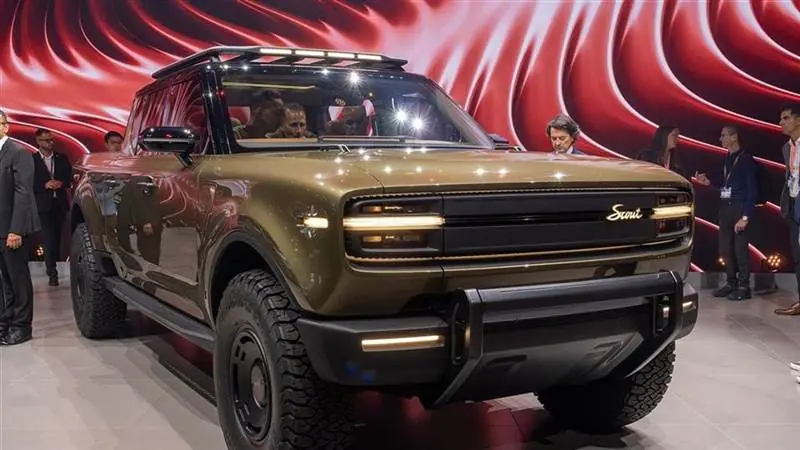
A brand with history baked in
Few revivals carry as much emotional cargo as Scout Motors. The original International Harvester Scout was built from 1961 to 1980 and helped invent the American sport-utility vehicle before the term existed. Volkswagen Group bought the rights to the name and founded Scout Motors as an independent company in 2022, and on October 24, 2024, in Nashville, it revealed two production-intent concepts: the Traveler SUV and the Terra pickup, designed and engineered in Michigan and slated for manufacture in South Carolina, a project the company says will create more than 4,000 American jobs.
The new vehicles take their names directly from the heritage parts bin. The original Scout II family included long-wheelbase Traveler and Terra variants, and Scout Motors' designers have echoed the boxy glasshouse, removable roof panels and rugged stance of the classics while making the hardware unmistakably modern.
One rugged platform, two body styles
Both models ride on an all-new body-on-frame platform with a solid rear axle, front and rear mechanical locking differentials and a disconnecting front sway bar, hardware that Scout says is intended to deliver credible off-road capability rather than crossover styling with all-terrain tires. The platform is designed for up to 35-inch tires, more than a foot of ground clearance and nearly three feet of water fording, according to the company's reveal specifications.
The Terra is the worker: a four-door pickup with a 5.5-foot bed, an available in-bed spare tire carrier, a retractable rear window and onboard power outlets, including a 240-volt socket for tools or campsite appliances. The Traveler is the family and adventure vehicle, with an enclosed cargo area, a front trunk, an optional swing-out rear wheel carrier and seating that can stretch beyond five occupants. Scout projects the Terra will tow more than 10,000 pounds and the Traveler more than 7,000 pounds, with nearly 2,000 pounds of payload for both, per the company's figures.
The hardware specificity is deliberate. An underbody-mounted 33-inch spare tire, an available front bench seat, mechanical door handles and a cabin full of physical switches and dials all point to the same philosophy Scout describes as a tactile, hands-on experience, with vehicle software built on a modern zonal architecture that still supports over-the-air updates and remote diagnostics.
Electric first, with a generator option
The powertrain story is where Scout diverges from rivals like the Ford Bronco and Jeep Wrangler. Both vehicles come as full battery-electric models with dual-motor four-wheel drive, an estimated nearly 1,000 pound-feet of torque and a targeted 0 to 60 mph time as quick as 3.5 seconds, according to Scout. Fully electric variants are anticipated to offer up to 350 miles of range.
Buyers who want the capability of electric drive without range anxiety can choose the Harvester, Scout's extended-range electric vehicle system. A gasoline-fueled onboard generator recharges the battery on the go rather than driving the wheels directly, and range-extended variants are projected to deliver more than 500 miles of total range. Scout says both energy systems preserve the off-road geometry and packaging benefits of the platform, and the company has indicated customer demand is strongly skewed toward the Harvester option.
Charging follows the industry's new common denominator. All Scout vehicles use the North American Charging Standard (NACS) port, an 800-volt electrical architecture with up to 350 kilowatt charging capability, and support bidirectional charging, per the company's announcement. That means native access to Tesla's Supercharger network and the ability to power tools or a home from the vehicle's battery.
Prices anchored under $60,000
Scout positioned the two vehicles against premium off-roaders while undercutting them. The company said at the reveal that the Traveler's entry model starts as low as $50,000 with available incentives and that retail prices start under $60,000, with the Terra's entry model starting as low as $51,500 under the same terms. A refundable $100 reservation opened on October 24, 2024, the same night the vehicles appeared.
Scout also confirmed it will sell directly to customers through an exclusive Scout sales and service network, bypassing the traditional franchised dealer model that its Detroit rivals rely on. The approach mirrors Tesla and Rivian and reflects Scout's positioning as a startup inside a giant automotive group.
Blythewood is where it all comes together
Production is targeted for 2027 at a new plant in Blythewood, South Carolina, north of Columbia. The company broke ground on the roughly $2 billion factory in March 2024, and the site is expected to employ thousands of workers once it reaches full capacity. As of mid-2026, Scout had not announced which body style or powertrain will be built first, and full customer deliveries are expected to trail the start of production.
The approach to market is as unconventional as the vehicles. Scout plans to sell parts and accessories through its own channels, and it has continued gathering feedback from public concept appearances before finalizing the launch trim mix. Reservations, which cost a refundable $100, have given the company a live read on demand since October 2024, and the strong interest in the Harvester range-extender has shaped expectations for how the first production year will look.
The debut matters well beyond two nameplates. Scout is Volkswagen Group's beachhead in the lucrative American truck and body-on-frame SUV market, a segment the group's European brands have never cracked. If the Traveler and Terra land with the capability and pricing Scout has promised, the brand could do what the original did six decades ago: prove that buyers will flock to a purpose-built utility vehicle that looks nothing like the crossovers around it.
The competitive field is watching closely. Electric rivals such as the Rivian R1T and the Ford F-150 Lightning have shown there is demand for electric trucks, while the gasoline Ford Bronco and Jeep Wrangler define the lifestyle off-road segment Scout explicitly targets. By offering a Harvester version that removes charging anxiety from the equation, Scout is hedging against the two objections, range and infrastructure, that most often stall mainstream buyers at the dealership door.
For the faithful, the appeal is simpler. After 45 years away, the Scout is coming back, and this time it plans to out-accelerate sports cars while fording three feet of creek on the way to the campsite.