VW ID. Polo Starts Below €25,000; ID. Cross Costs More
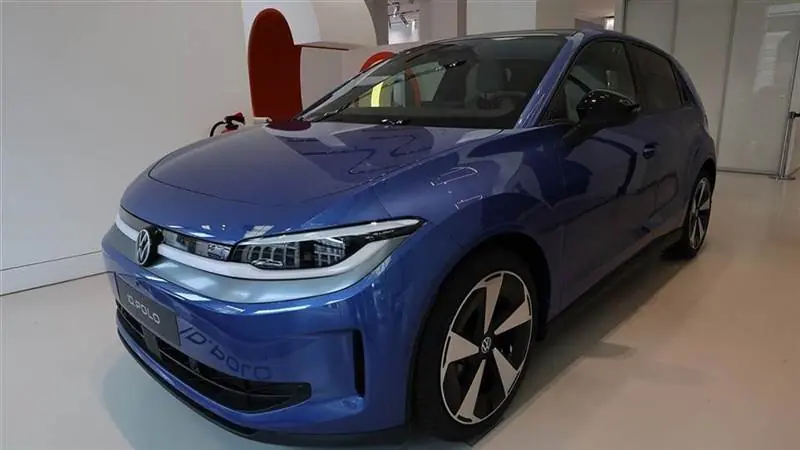
A family of small EVs from Munich
Volkswagen used the IAA Mobility show in Munich in September 2025 to present its Electric Urban Car Family: four small electric models from Volkswagen, CUPRA and Škoda planned for market introductions during 2026. The group's announcement described an entry point around 25,000 euros for the family, not an identical starting price for every model. The Volkswagen pair is the ID. Polo hatchback and ID. Cross small SUV. The group's medium-term goal of about 20 percent of Europe's electric small-car segment is a company target, not an achieved share.
Group CEO Oliver Blume framed the family as mobility for all, from Europe for Europe. Underneath that slogan sits a serious industrial argument: every model shares the further-developed MEB+ electric platform and, for the first time, the new Volkswagen Group unified cell, spreading development and battery costs across hundreds of thousands of cars per year.
ID. Polo: a famous name goes electric
The ID. Polo is the seventh generation of a nameplate with more than 50 years of history and over 20 million units sold, and the first to be fully electric. It is a five-door hatchback on a front-wheel-drive MEB+ layout, a departure from the rear-drive architecture of earlier ID models. German pricing starts at 24,995 euros for the entry Trend version, according to Volkswagen, keeping the promise made in Munich.
Two battery sizes are offered. The 37 kWh pack uses lower-cost LFP chemistry and delivers up to 329 kilometers of WLTP range, while the 52 kWh pack is good for up to 454 kilometers, per Volkswagen's figures. Three front-motor outputs are available: 85 kW, 99 kW and 155 kW, the latter badged for the first time on the Polo line. European sales began with pre-sales from the end of April 2026, and production is handled at Volkswagen's Martorell plant near Barcelona.
Standard equipment runs further upmarket than the price suggests. Every ID. Polo gets DC fast charging, and the range includes a new Connected Travel Assist with traffic light recognition, one-pedal driving, vehicle-to-load power output of up to 3.6 kilowatts and a 13-inch central touchscreen, according to Volkswagen's press materials.
Charging speed depends on the battery. The 52 kWh version takes up to 105 kilowatts of DC power and refills from 10 to 80 percent in roughly 24 minutes, while the 37 kWh LFP version accepts up to 90 kilowatts and completes the same sprint in about 23 minutes, per Volkswagen's technical briefing. The car itself measures 4,053 millimeters long with a 441-liter trunk, dimensions that keep it city-friendly while the long wheelbase protects rear-seat space.
ID. Cross: the compact SUV companion
The ID. Cross takes the same platform family into a small SUV body. Its production version had its world premiere on July 15, 2026, and Volkswagen's launch announcement quoted a future German entry price from 27,995 euros, with European market introduction planned for autumn. That advertised base version should not be confused with the more expensive configurations offered when advance sales first opened. The battery, equipment and opening date for the entry version need to be checked separately in the national ordering information.
The numbers back the packaging story. At 4,153 millimeters long, the ID. Cross offers 475 liters of luggage space, 20 liters more than the combustion T-Cross, plus a 25-liter frunk under the hood and an XL compartment under the variable boot floor, according to Volkswagen. It uses the same 37 kWh and 52 kWh battery options and the same 85, 99 and 155 kW output levels as the ID. Polo, with WLTP range of up to 427 kilometers and standard DC fast charging that refills from 10 to 80 percent in around 23 minutes.
Production is assigned to the Landaben plant in Pamplona, Spain, alongside the mechanically related Škoda Epiq, which deepens the family's Iberian manufacturing footprint. Volkswagen says the ID. Polo, ID. Cross and the forthcoming ID. EVERY1 will together cover more than 80 percent of the electric models its Spanish-market customers choose.
One platform, one cell, many characters
The platform strategy is the quiet headline. By sharing MEB+ hardware and the unified cell across the ID. Polo, ID. Cross, the CUPRA Raval and the Škoda Epiq, Volkswagen claims economies of scale that let each brand bring technologies from higher segments to the entry class, from LED matrix lighting and massage seats to the smartphone-as-a-car-key function and an app store with more than 100 applications.
The shared battery cells come from PowerCo, Volkswagen's battery subsidiary, and the company says the unified cell design is central to hitting the price targets without stripping equipment. Fast charging is standard across the family rather than an option, a deliberate contrast with some rivals that reserve DC charging for expensive trims.
The family also shares a design philosophy, which Volkswagen calls Pure Positive: friendly, visually stable proportions, fabric-wrapped surfaces in the cabin and physical controls for the functions drivers use most. Thomas Schaefer, who leads the Volkswagen brand, has described the models as bringing technologies from higher segments to the entry class while keeping each brand's character distinct, and the group's platform team points to assistance features such as lane-change support and traffic light recognition that were luxury-car territory only a few years ago.
A GTI is coming
Enthusiasts have not been forgotten. Volkswagen has confirmed an ID. Polo GTI planned for 2027 with around 166 kW, or roughly 226 horsepower, wearing the heritage badge that has topped the Polo range for decades. The company has also previewed the ID.3 Neo as the next rung on the electric ladder, part of a broader True Volkswagen portfolio reset announced in 2026.
Why it matters
The price distinction matters when comparing these two vehicles: the Polo's stated 24,995-euro entry point sits below 25,000 euros, while the Cross's stated 27,995-euro entry point does not. Those are German base-price references, not equivalent configurations or guaranteed immediate delivery offers. A shopper choosing between them should compare the battery and equipment attached to each quote, the order opening for that version, and the price after mandatory charges.
The family strategy shares development and production resources, but it leaves a practical choice between body styles and budgets. Actual registration volumes and local availability will show whether the new models reach the buyers targeted by the launch plan. A group-wide affordability message should not replace the model-specific price and specification check.