Xiaomi YU7 SUV Takes Aim at Tesla's Model Y
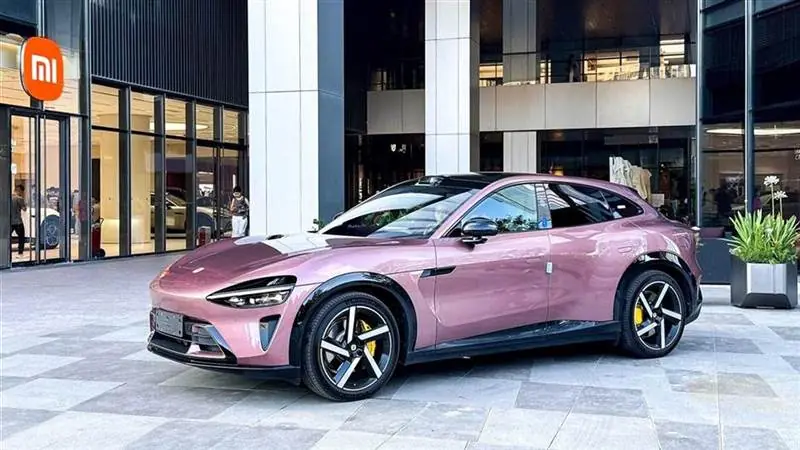
The Model Y's most serious challenger yet
Tesla's Model Y has worn the crown of the world's best-selling vehicle for years, but no rival has attacked it as directly as Xiaomi's YU7. The first SUV from the Chinese electronics giant made its market debut on June 26, 2025, and within three minutes of orders opening, Xiaomi said firm orders had passed 200,000 units. One hour after launch, that figure stood at 289,000, according to announcements the company posted as the event ended. No car launch in China, and arguably anywhere, has produced an order curve like it.
The numbers mattered because of what the YU7 is: a mid-to-large electric SUV with Model Y proportions, Model Y ambitions and a price list built to undercut it. Lei Jun, Xiaomi's founder and CEO, positioned the car as a luxury high-performance SUV rather than a bargain, telling customers before launch that he expected it to be as popular as the SU7 sedan, noting that test-drive registrations for the YU7 had already run at three times the SU7's pace over the same period, according to his comments reported ahead of the event.
Pricing built to undercut
Xiaomi launched the YU7 in three versions. The Standard rear-wheel-drive model starts at 253,500 yuan, the Pro dual-motor version at 279,900 yuan, and the Max high-performance version at 329,900 yuan, according to Xiaomi's launch announcement. Tesla's refreshed Model Y, China's best-selling SUV in the months before the launch, started from 263,500 yuan in the country, which put the entry YU7 a full 10,000 yuan cheaper despite equipment levels that most comparisons placed well ahead of the Tesla.
That pricing is aggressive given the hardware. Every YU7 includes a lidar sensor, an Nvidia Thor computing platform rated at 700 TOPS for driver assistance, and Qualcomm's latest cockpit chip, per Xiaomi's specifications. Xiaomi also allowed buyers who had ordered an SU7 but were still waiting for delivery to switch their orders to a YU7, a move that acknowledged the SU7's wait times while funnelling demand toward the new SUV.
Range and 800-volt charging
The headline figure is range. The YU7 Standard is rated at up to 835 kilometers on China's CLTC test cycle, drawing on a 96.3-kWh lithium iron phosphate battery, according to Xiaomi. The Pro manages 770 kilometers from the same pack, while the Max uses a 101.7-kWh ternary lithium battery for 760 kilometers. CLTC figures run generous compared with EPA or WLTP numbers, so real-world results will be lower, but the underlying hardware is unambiguously long-legged for the price class.
Charging is handled by an 800-volt silicon carbide electrical platform with a peak rate of 5.2C, per Xiaomi's specifications. The company says the YU7 can add up to 620 kilometers of range in 15 minutes of charging and go from 10 to 80 percent in as little as 12 minutes on compatible hardware. Those numbers put the YU7 at the front of its class for charging speed, and comfortably ahead of the 400-volt Model Y it undercuts.
Performance, design and the no-cluster cabin
The range-topping YU7 Max produces 508 kW from its dual-motor all-wheel-drive system and reaches 100 km/h in a claimed 3.23 seconds with a top speed of 253 km/h, according to Xiaomi. The Pro covers the same sprint in 4.27 seconds with 365 kW, and even the single-motor Standard, at 235 kW and 5.88 seconds, is quick by the standards of family SUVs. Dimensions sit at 4,999 millimeters long, 1,996 millimeters wide and 1,600 millimeters tall on a 3,000-millimeter wheelbase, a size class above the Model Y.
Inside, Xiaomi deleted the traditional instrument cluster entirely. In its place, a panoramic projection system casts speed, navigation and battery data onto a strip running the width of the dashboard beneath the windshield, creating what the company describes as a 1.1-meter retina-grade display, according to Xiaomi's launch materials. The coupe-style roofline, full-width light bars and nine-color palette follow the SU7's design language, and Lei Jun said that although the YU7 shares the same Modena platform as the sedan, roughly 90 percent of its parts were newly developed.
Deliveries and market impact
Customer deliveries began in early July 2025, and the YU7's ramp became the fastest in Xiaomi's young car business. The company said the SUV passed 150,000 deliveries within about six months, a pace it noted was more than double what the SU7 managed after its own launch, and the YU7 went on to top China's mid-to-large SUV sales rankings for months at a stretch, according to company statements and industry trackers.
For Tesla, the YU7 is the first opponent to contest the Model Y on brand buzz as well as price and specs in its largest single export market. For the wider industry, the launch confirmed that Xiaomi's SU7 success was not a one-off, and that a company founded as a carmaker barely four years earlier could set the tempo for the most important vehicle segment in the world's largest EV market. The Model Y still sells in enormous numbers, but the benchmark it sets is no longer unchallenged.