Tesla Launches Its Robotaxi Service in Austin
A deliberately small debut
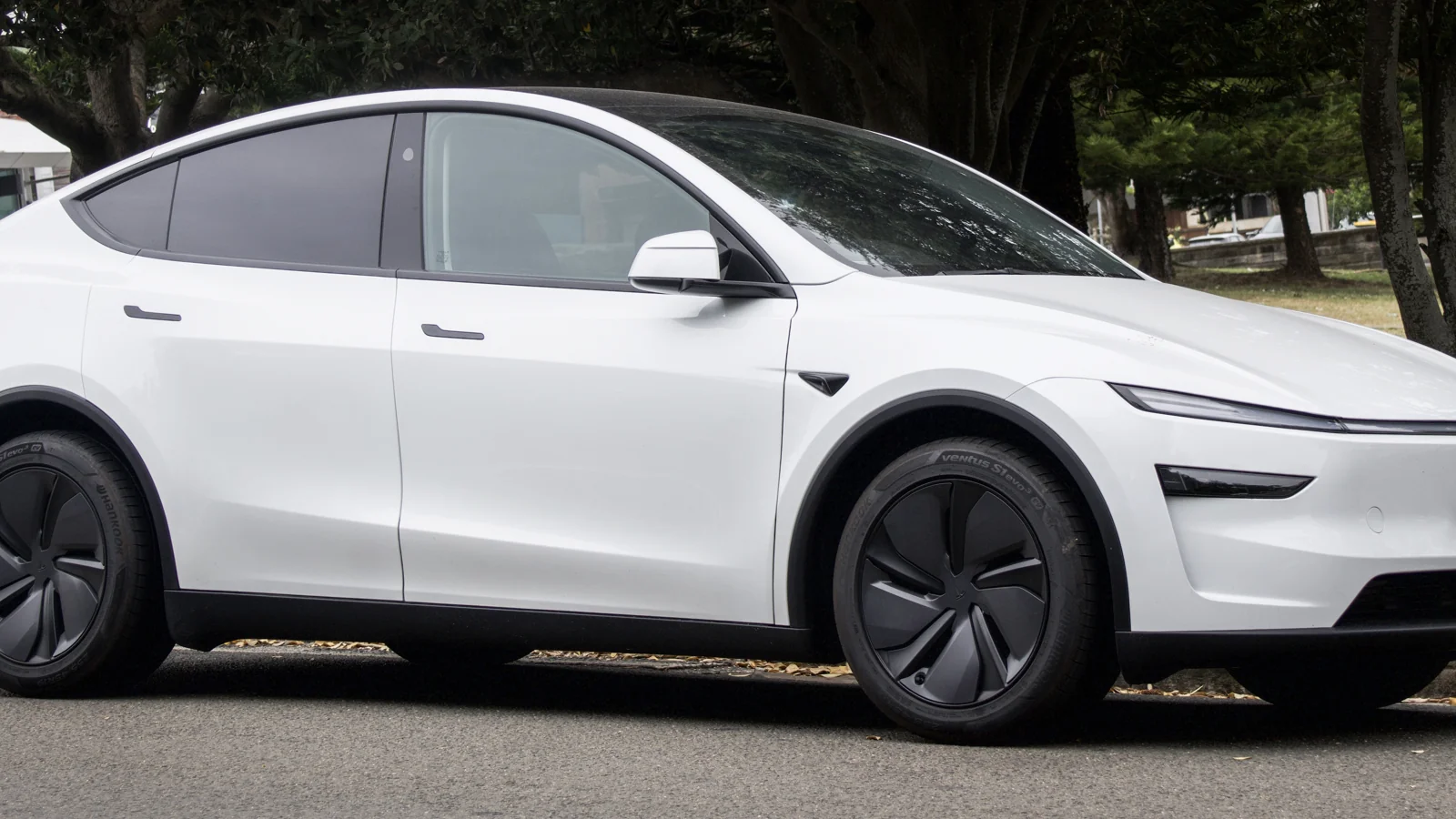
On June 22, 2025, Tesla finally put paying passengers in cars driven by its Full Self-Driving software. The launch of the Robotaxi service in Austin, Texas was real but deliberately modest: a fleet of roughly ten modified Model Y SUVs, an invitation-only rider list drawn largely from owners, investors and online supporters, and a human "safety monitor" seated in the front passenger seat of every vehicle, as reported by Engadget from the launch weekend. Rides ran only within a geofenced slice of South Austin, operated from 6 a.m. to midnight, and excluded airports and other tricky zones.
The price was the marketing. Early riders paid a flat 4.20 dollars per trip — a number chosen for its connotations rather than its economics — which undercut Austin taxis and ride-hail rides by a wide margin. Riders summoned cars through a new Robotaxi app that Tesla linked to existing Tesla accounts, complete with playlist imports and climate settings. In-car controls were deliberately sparse: in-app buttons could ask the car to pull over or stop in lane, and a support line stood in for a driver. Livestreams from the first days showed safety monitors gripping a grab handle at times, stepping in on a few maneuvers, and mostly staying quiet, while genuine driverless Waymos, operated with partner Uber in the same city, glided past waiting Tesla riders.
Pricing and territory moved fast
The experiment's constraints began loosening within weeks. By mid-July 2025 the flat fare had risen to 6.90 dollars, and a few weeks later Tesla dropped flat pricing altogether in favor of a 1-dollar base fare plus 1 dollar per mile, according to service trackers and rider reports compiled by Tesla-focused news sites. The geofence expanded too: CEO Elon Musk posted in July 2025 that the Austin service area had grown, and Tesla kept widening coverage through the year, eventually reaching the full metropolitan area including Austin-Bergstrom International Airport, per year-one retrospectives.
Expansion beyond Austin followed a different rulebook in each state. In the San Francisco Bay Area, Tesla offers a comparable ride-hailing service, but a Tesla employee sits in the driver's seat — the company operates there under a charter-party carrier permit and holds no California permit to carry passengers in a driverless vehicle, a distinction Tesla's own filings acknowledge. Texas, by contrast, enacted state framework rules enabling commercial driverless operations, which is why Austin became the proving ground.
Taking the person out of the passenger seat
The pivotal moment came on January 22, 2026, when Tesla began letting members of the public ride in Austin with nobody in the car at all, according to the company's announcements and press coverage. Front-seat safety monitors were removed entirely, making every Austin ride fully driverless. In April 2026 Tesla extended unsupervised service to Dallas and Houston from day one — no monitor period, no phased ramp — reflecting both accumulated miles and the friendlier Texas regulatory climate. A dedicated iOS app had arrived in September 2025, with Android following in April 2026.
How big is the operation really? Tesla discloses cumulative "paid Robotaxi miles" — roughly 2.5 million through June 2026, per its shareholder communications — but not ride counts, fleet size or intervention rates. Independent counts and Texas disclosure filings reviewed by industry trackers put the active driverless fleet anywhere from about 25 vehicles in early 2026 filings to roughly 60 by mid-year — a long way from Musk's launch-week prediction of a thousand driverless Teslas "within a few months," and coverage routinely flags the gap between targets and deployments. Rider experience data is thin too, but tracker measurements found Austin wait times averaging around 15 minutes, roughly triple Waymo's typical Austin wait, which suggests demand still outstrips the small fleet. Collisions have occurred — mostly, per operational summaries, minor rear-end crashes in which human-driven cars struck stopped Robotaxis — and Tesla maintains that no major accident has been attributable to the autonomous system over the first year, a claim made without access to independent per-mile data.
Regulators keep circling
The National Highway Traffic Safety Administration has not looked away. In October 2025 the agency opened an investigation into roughly 2.88 million vehicles equipped with Full Self-Driving after reports of crashes and traffic violations in low-visibility conditions, and in March 2026 it escalated that probe to an engineering analysis — the step that typically precedes a recall — covering an estimated 3.2 million vehicles, according to NHTSA documents reported by TechTimes. The agency's stated concern is that the camera-only system fails to detect or warn appropriately when glare, fog or airborne debris degrade visibility. NHTSA's robotaxi scrutiny is not unique to Tesla, but the volume of vehicles under review is the largest of any ongoing AV investigation.
The contradiction at the heart of the service is architectural. Waymo, the market leader, wraps its vehicles in lidar, radar and high-definition maps; Tesla argues cameras and neural networks will scale further and cheaper. The Austin fleet is the first real-world, paying test of that bet — and its geofence, weather limits and monitor history show Tesla's own caution about where the system can operate safely today.
The Cybercab endgame
The Model Ys currently carrying Austin riders were always a stopgap. Tesla's purpose-built robotaxi, the two-seat Cybercab with no steering wheel and no pedals, began production at Giga Texas in April 2026, according to company statements, with volume manufacturing expected to ramp through 2026. The vehicle Tesla has shown publicly — including displays at US showrooms — is designed around the same camera-only stack now running paid rides.
So where does the service stand two years in? Austin has a real, public, driverless ride-hailing network; Dallas and Houston have joined it; the pricing has drifted up from novelty territory toward commercial rates; and the safety-monitor era has ended in Texas while remaining a requirement in California. What Tesla has not yet produced is the thing skeptics ask for most: transparent data on fleet size, interventions and incidents. Until it does, the Austin launch will keep serving double duty — as proof that a camera-only robotaxi network can run at all, and as the service whose boldest claims still outrun its published evidence.