Waymo's Robotaxi Network Keeps Expanding Across the US
From pilot project to public network
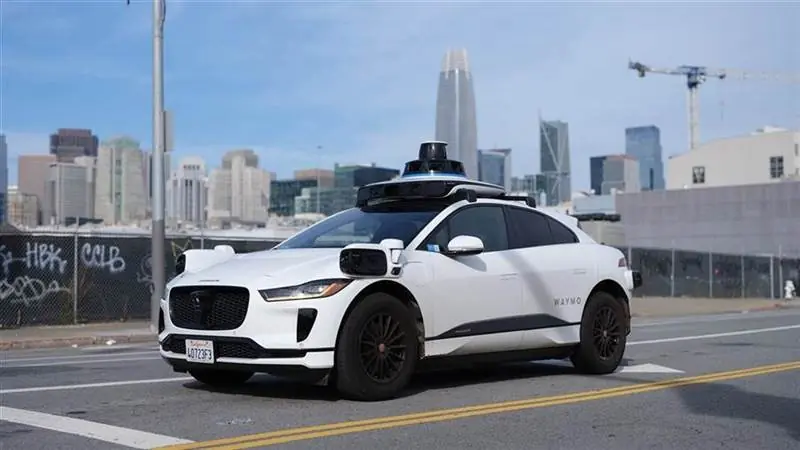
Two years ago Waymo was a promising pilot. Today it is the largest fully driverless ride-hailing operation in the United States, and its growth curve has bent sharply upward. In April 2025 the Alphabet subsidiary announced it was providing more than 250,000 paid rides per week, per CNBC, up from 50,000 a year earlier — a fivefold increase in twelve months. By May 2025 the company had surpassed 10 million total paid trips across its history, and in July 2025 it crossed a milestone no competitor can yet claim: 100 million fully autonomous miles driven with no human behind the wheel, as reported by The Robot Report and confirmed by Waymo. The fleet doubled its rider-only mileage in just the previous six months.
The momentum carried into 2026. Waymo says riders took roughly 15 million trips in 2025 alone, about three times the 2024 total, bringing lifetime rides past 20 million by early this year, according to figures the company released with its February funding announcement. The acceleration is striking: the first 10 million paid trips took roughly eight years of commercial operation, and the next 10 million took less than a year. Industry trackers estimated the fleet at roughly 2,500 to 3,000 robotaxis by mid-2026, with weekly paid rides approaching half a million and rider-only miles running at around 4 million per week — numbers compiled by independent robotaxi trackers such as Presenc and TechCrunch.
Where the network runs
Phoenix deserves its place in the history books: Waymo's first fully driverless rides happened there, and the desert metro remains its largest market. From that base the company went fully public in San Francisco in 2022, added Los Angeles in 2024, and then accelerated. The core service areas now include Austin and Atlanta, both operated through a partnership in which rides are dispatched via the Uber app — a pairing Waymo chose deliberately, since Uber's demand density lets each robotaxi complete more paid trips per day. Austin's service area alone grew from 37 to 90 square miles as the company pushed to match demand, per Waymo announcements.
Miami went live in January 2026, per TechTimes coverage of the rollout, and Washington, DC is slated for 2026, contingent on local rules that currently require a human operator. The pipeline stretches well past those launches. Waymo has publicly targeted more than 20 additional US cities — a list that includes New York City, Dallas, Houston, San Antonio, San Diego, Orlando, Nashville, Denver, Detroit and Las Vegas — and has begun international testing in Tokyo, with London announced as a second international target alongside its February 2026 investment round. Mapping fleets have appeared in Boston and other cities ahead of formal launch. Backing the fleet physically, Waymo opened a large integration plant in Mesa, Arizona, announced in May 2025, that is designed to build tens of thousands of fully autonomous vehicles per year at full capacity.
The 126-billion-dollar vote of confidence
Wall Street and Silicon Valley have noticed. On February 2, 2026, Waymo closed a 16 billion US dollar investment round at a 126 billion dollar valuation — more than double the 45 billion valuation it reached in October 2024 — according to TechCrunch and the company's own blog. The round was led by Dragoneer Investment Group, DST Global and Sequoia Capital, with Alphabet maintaining majority ownership. It was, investors argued, not a bet on unproven technology but on a service that has already crossed into commercial scale: the only US operator running Level 4, fully driverless rides for the general public across multiple major cities.
The safety record is the underpinning. Waymo has published research claiming reductions of around 90 percent in serious-injury crashes compared with human drivers over the same mileage in the cities it serves, based on comparisons against benchmark human crash rates. Its sixth-generation Waymo Driver consolidates cameras, lidar, radar and external audio receivers into a package estimated by industry analysts to cost well under 20,000 dollars per vehicle — down from six-figure estimates for earlier generations — which is what makes fleet growth economically possible, per TechTimes reporting.
Competition is closing — slowly
Waymo is not unchallenged. Tesla launched its own Robotaxi service in Austin in June 2025 and has expanded driverless operation to Dallas and Houston, though its driverless fleet remains in the dozens of vehicles by independent counts, versus Waymo's thousands. Amazon's Zoox launched commercial service in Las Vegas in late 2025 and is expanding in San Francisco and Austin. The sharpest volume competition comes from China: Baidu's Apollo Go has reported weekly driverless rides comparable to Waymo's, operating across more than ten Chinese cities. For now, though, Waymo's combination of scale, cities and mileage remains unmatched in the West.
Growing pains persist. A January 2026 collision in which a Waymo vehicle braked and contacted a child running into the road near a Santa Monica school left the child with minor injuries and prompted investigations by NHTSA and the NTSB, per CNBC; school districts in Austin and Atlanta have logged complaints about robotaxis passing stopped school buses; and riders have documented occasional confusion around construction zones and double-parked vehicles. Waymo says each incident feeds back into its models, and that its vehicles "behaved as expected" in the Santa Monica case.
What 2026 will decide
The question for 2026 is no longer whether driverless ride-hailing works, but how fast it can scale profitably. Waymo enters the second half of the year with roughly 3,000 vehicles, a fresh 16 billion dollars, manufacturing capacity coming online in Mesa, and launches planned in Washington, Florida and beyond. Its own stated target — reported in funding coverage — is on the order of a million paid rides per week by the end of 2026. Reaching that mark would put driverless rides on pace with some mid-sized US taxi markets, and would make Waymo's once-mocked safety-first strategy look less like caution and more like the fastest way to build a transportation network that cities actually accept.