NACS Becomes the Standard Plug for North American EVs
How one plug won North America
Few standards battles in the auto industry have been decided this quickly. In November 2022, Tesla renamed its proprietary charging connector the North American Charging Standard and invited other manufacturers to use it. Within a year it had the institutional blessing it needed: SAE International began formal standardization in June 2023 and published the connector as the J3400 standard in December 2023, turning a single company's plug into an open industry specification, as noted in SAE-related coverage of the process. The US federal government subsequently recognized J3400 chargers for National Electric Vehicle Infrastructure funding, removing the last regulatory reason to stick with the bulkier Combined Charging System (CCS1) that every non-Tesla automaker had used since 2012.
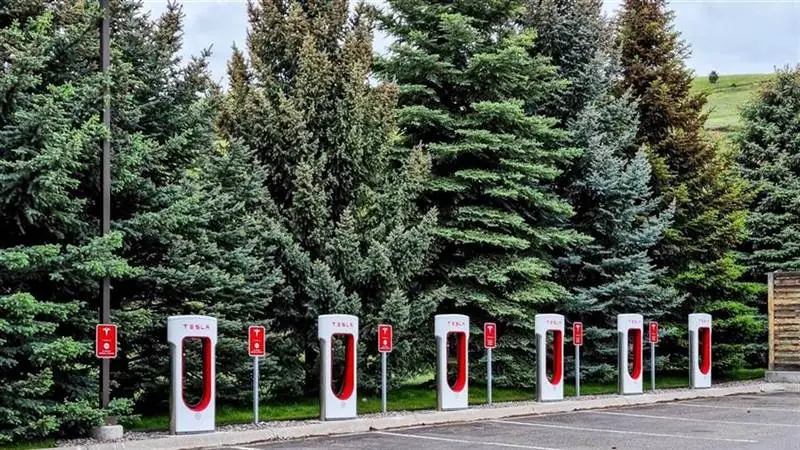
The logic of the switch was less about the plug itself than about what was attached to it. Tesla's Supercharger network was — and remains — the largest and most reliable DC fast-charging network in North America, with more than 20,000 Superchargers in the United States alone, according to Hyundai's March 2025 announcement confirming access for its customers. Tesla's uptime, plug-and-charge billing and dense highway coverage made the network a genuine competitive asset, and smaller charging operators were already adopting NACS connectors because the hardware is compact, light enough to hold one-handed, and handles both AC and DC charging through a single port.
The dominoes fall
Ford broke ranks first, announcing adoption in May 2023. General Motors, Rivian, Volvo, Polestar, Mercedes-Benz, Nissan, Honda, Hyundai, Kia, Genesis, Toyota, Subaru, BMW, Lucid and essentially every other major seller of EVs in North America followed over the subsequent 18 months, until virtually the entire industry had committed. What began as an awkward capitulation to a rival's hardware became table stakes: automakers discovered that customers cared far more about where they could charge than about which connector came out of the wall, and CCS networks could not match Supercharger coverage on the routes where EVs are sold.
Adoption arrived in two phases. The first was adapters. Starting in 2024, Ford, GM, Rivian and other manufacturers began supplying or selling CCS-to-NACS adapters that unlocked Superchargers for existing vehicles; Hyundai began distributing complimentary adapters to its CCS-equipped owners in March 2025, giving them access to more than 20,000 US Superchargers, per the company's press release. Some networks operated by Ionna — the charging joint venture founded by BMW, GM, Honda, Hyundai, Kia, Mercedes-Benz, Stellantis and Toyota — also build in NACS connectors from the start.
Why CCS lost
The speed of the collapse is easier to understand when you remember what CCS1 was like to use. The combined connector was large enough to need two hands, the cables were stiff, and early public charging was dominated by networks whose stalls were frequently broken or derated. Drivers who owned a CCS vehicle and a Tesla learned the contrast within a single road trip: one network where almost every stall worked, and a patchwork where finding a functioning 150 kW charger could take a detour. Reliability complaints from non-Tesla drivers became a running theme in EV coverage, and when automakers were offered access to the Supercharger network in exchange for adopting the connector, the decision made itself. CCS1 is not going away overnight — hundreds of thousands of vehicles on the road still use it — but the industry's center of gravity has moved.
Native ports reach the showroom
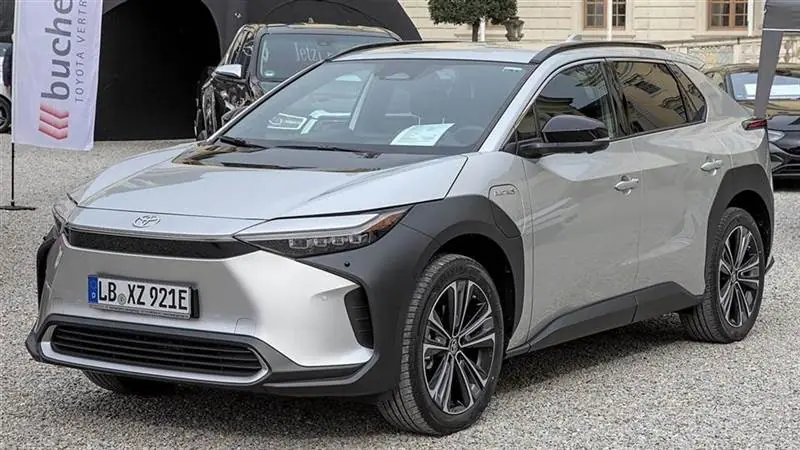
The second phase is the one now reshaping dealer lots: vehicles built with the NACS port instead of CCS1. The refreshed 2025 Hyundai Ioniq 5 was the first high-volume EV to ship with a native NACS port in the US, followed by the three-row 2026 Ioniq 9. The list has grown steadily through 2025 and 2026 — per manufacturer announcements and compatibility trackers, it now includes Kia's EV6 and EV9 updates and the new Kia EV4, the redesigned 2026 Nissan Leaf, the 2026 Toyota bZ, Subaru's Solterra update, Cadillac's Optiq, Lucid's Gravity, Mercedes' CLA and BMW's 2026 i5, with more arriving each model year. For buyers of those cars, charging at a Supercharger is simply plug-and-play: no adapter, no waitlist, no compromise.
For drivers of earlier CCS vehicles, the adapter era persists. Compatibility guides compiled through mid-2026 show most 2024-2026 CCS1 models gaining Supercharger access via manufacturer-supplied or purchasable NACS adapters, while a handful of laggards — certain Audi and Stellantis models among them — were still waiting for official support. The transitional friction is real, but it is clearly temporary: with 32 or more models tracked as NACS-native by mid-2026 and the majority of announced future EVs specifying J3400 ports, CCS1 is settling into the role CHAdeMO occupied a decade ago — supported, but fading.
What drivers actually get
The practical payoff is choice. A 2026 Ioniq 5 owner can road-trip on Tesla's network at up to the car's 350 kW peak, then use Ionna or Electrify America stations on the same trip. Supercharger pricing for non-Tesla vehicles is typically slightly higher than Tesla owners pay, and idle fees apply, but session setup now happens through the Tesla app or tap-to-pay at V4 posts. Meanwhile the adapter market has matured: UL-certified NACS-to-CCS adapters rated for hundreds of kilowatts are widely available, an important safety step in a market previously flooded with unverified hardware.
The transition also closes out old standards. The redesigned Leaf's native NACS port ends the Nissan-CHAdeMO pairing that was the last mainstream holdout of the original fast-charging format in North America, and compatibility trackers now list GM's 2027 Chevrolet Equinox EV, Blazer EV and Bolt on the NACS-native calendar alongside Cadillac's 2027 Vistiq. For drivers who keep a CCS vehicle for years to come, an adapter in the trunk remains the bridge — but for anyone shopping new in 2026, the question is no longer whether the car has NACS, but which networks beyond Tesla it can also use.
Canada is following the same path, with Supercharger sites expanding across the country and provincial funding programs beginning to co-fund NACS-equipped stations, per Canadian EV-infrastructure reporting. Industry projections cited by charging analysts expect NACS to be the dominant fast-charging connector in North America by 2027.
The catch nobody mentions
There is one irony worth noting: the standardization took so long to reach hardware that some of the earliest adopters still have not switched. Ford committed to native NACS ports "from 2025" back in 2023, yet as of early 2026 no Mustang Mach-E or F-150 Lightning ships with a factory NACS port — Ford instead bundles an adapter, per compatibility trackers. The lesson of the NACS landshift is that in charging, as in software, the network won first and the hardware followed. North America now has one plug, one sprawling reliable network, and an adapter drawer slowly becoming obsolete.