EV Battery Prices Keep Falling Toward $100 per kWh
Another record low
The most important number in the electric vehicle business is not a sales figure — it is the price of a kilowatt-hour of battery. In December 2025, research firm BloombergNEF published its annual Lithium-Ion Battery Price Survey, and the verdict was another historic low: volume-weighted average pack prices across all applications fell 8 percent during 2025 to 108 US dollars per kWh, according to BNEF. That continues one of the steepest cost declines of any technology in history — BNEF calculates that pack prices have dropped about 93 percent since 2010, when the average was roughly 1,474 dollars per kWh in inflation-adjusted terms.
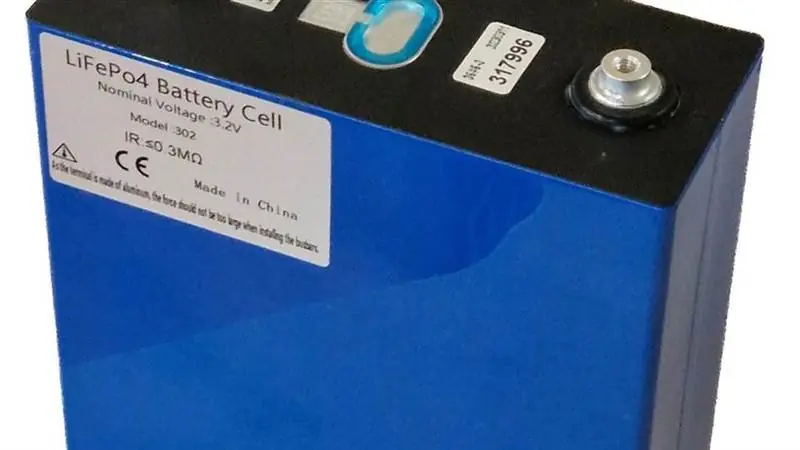
The 2025 decline came despite headwinds that were supposed to push prices up. Lithium costs rose on supply risks at key Chinese production assets, and cobalt spiked after new export quotas from the Democratic Republic of Congo. Yet finished battery prices still fell. BNEF credits three absorbers: the accelerating shift to cheaper lithium iron phosphate (LFP) chemistry, long-term supply contracts, and broader hedging strategies across the industry.
The numbers behind the trend
The trajectory matters as much as the level. In BNEF's 2024 survey, the average pack price fell 20 percent, from 139 dollars per kWh in 2023 to 115 dollars at the end of 2024 — a drop driven by the fight for market share and raw-material deflation. The 2025 survey shows the market repricing more moderately but consistently. Average cell prices slipped about 5 percent to roughly 74 dollars per kWh, per BNEF data reported by Energy-Storage.news. Battery-electric vehicle packs averaged 99 dollars per kWh in 2025 — the second consecutive year that BEV packs, the transport segment's cheapest category, sat below the symbolic 100-dollar threshold. A year earlier, BNEF had put BEV packs at 97 dollars per kWh and declared battery cars at cost parity with combustion cars in China. For 2026, BNEF expects a further decline of around 3 dollars per kWh as LFP adoption spreads.
The survey itself is broad. BNEF assessed 320 data points across passenger EVs, e-buses, commercial vehicles, two- and three-wheelers and stationary storage, and prices fell in every segment. The outliers tell their own story: packs for two- and three-wheeled vehicles — the workhorses of India and Southeast Asia — slid to about 133 dollars per kWh as volumes there climb, while e-bus and commercial-vehicle packs remain above passenger-car levels because duty cycles demand oversized, long-lived batteries. Competition, in other words, is pulling the whole curve down, not just the headline cell.
Chemistry explains much of the gap. LFP packs averaged 81 dollars per kWh across all segments in the 2025 survey, while nickel manganese cobalt (NMC) packs averaged 128 dollars, according to BNEF. The lowest observed prices were startling: LFP cells at 36 dollars per kWh and complete packs at 50 dollars per kWh, both for stationary storage systems deployed in China — figures BNEF noted were matched by comparable lows in 2024, suggesting they are becoming industry benchmarks rather than one-off quotes.
Why prices keep falling
The dominant force is Chinese overcapacity. China produces more battery cells than its domestic EV and storage markets can absorb, sustaining cut-throat competition among manufacturers; BNEF estimates China's annual stationary-storage cell capacity at roughly 557 GWh, about double global demand in that segment. That pressure shows up starkly in the regional data: average pack prices in China fell 13 percent in 2025 to 84 dollars per kWh, while prices in North America and Europe ran 44 percent and 56 percent higher respectively, reflecting local production costs and dependence on imported cells.
The consequence is visible in showrooms. BNEF and other analysts note that in China, many EV models across most segments are already cheaper than comparable combustion cars — true price parity — while Western buyers still pay a premium that tracks almost exactly with the battery-cost differential. Stationary storage tells the most dramatic story: pack prices there plunged 45 percent in a single year to 70 dollars per kWh, making storage the lowest-priced battery segment for the first time and fueling record grid-battery deployments from China to California.
Chemistry competition is widening, too. BNEF's coverage notes that diversification within the battery sector is accelerating, with sodium-ion production facilities coming online even as new cathode and anode chemistries edge toward commercialization. Sodium-ion cells use abundant, inexpensive raw materials and are aimed squarely at the same entry-level and storage markets where LFP now rules, promising a second front in the price war. Neither will displace high-nickel cells in long-range flagship EVs soon, but for cost-driven segments the floor keeps dropping.
What the 100-dollar line really means
The 100-dollars-per-kWh pack price has long been treated as the point where EVs reach sticker-price parity with combustion cars without subsidies. The nuance in the latest data is that the average has split. Globally, the all-segment average of 108 dollars still sits above the line, dragged up by NMC packs, premium vehicles and Western production costs. But the global BEV pack average of 99 dollars is already below it, and Chinese packs at 84 dollars are far below — which is why Chinese automakers can profitably sell EVs at prices Western rivals cannot yet match. Western automakers have responded by introducing LFP packs into entry-level models, a shift BNEF expects to pull global averages down further.
Cheaper batteries reshape more than car prices. They lower the cost of grid storage that stabilizes renewable-heavy power systems, tighten the business case for electric trucks and buses, and give automakers room to absorb tariffs without raising stickers. BNEF's longer-term view is that continued manufacturing efficiency, supply-chain expansion and emerging technologies — silicon and lithium-metal anodes, solid-state electrolytes, new cathodes and cell-formation processes — will drive the next waves of decline, even if none arrives as steeply as the early-2010s drop.
The caveats worth remembering
Two cautions temper the celebration. First, the survey's averages mask wild variation at the edges — the 36-dollar Chinese storage cells are not what a European buyer pays for an NMC pack in a premium SUV. Second, prices are falling fastest where competition is most brutal, which has real consequences for battery makers' margins; BNEF's analysts note that low prices are, in their words, both good and bad news depending on where you sit in the industry. For buyers, though, the direction is unambiguous: every year the kilowatt-hour gets cheaper, and the distance between the EV price tag and the combustion price tag keeps shrinking toward zero.